
Have you ever felt like your voice just doesn’t want to come out? Like it’s hiding behind a wall, or stuck somewhere in your throat? That sensation is very real—and very common. And it has a lot to do with what’s happening inside your throat and body when you try to sing.
So, let’s break it down in a simple way.
What’s Actually Happening When Your Voice Feels “Stuck”?
When your voice feels tight or trapped, it’s usually because certain muscles around your voice box are tensing up. One of the biggest culprits?
👉 Your false vocal folds.
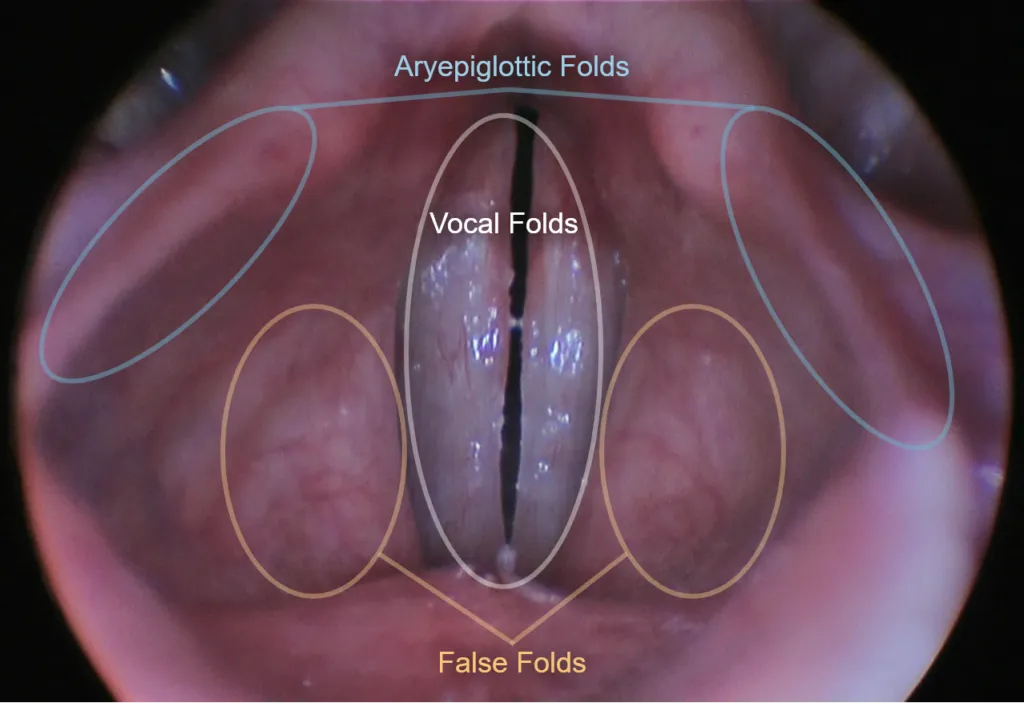
🤔 What Are False Vocal Folds?
Inside your throat, you have true vocal folds—these are the ones that vibrate and actually make sound when you speak or sing.
Above those, you have false vocal folds (also called vestibular folds). These don’t directly produce sound (they can be used for growl), but they can close over the top of your true vocal folds, especially when your body thinks it needs to protect itself.
You use your false vocal folds when:
- You lift something heavy 💪
What happens: When you lift something heavy, your body instinctively closes the false vocal folds to stabilize your core and create internal pressure. This is your body’s natural protective response.
Why it’s a problem: When singing, if you unintentionally mimic this action, you’ll feel throat tension and struggle to maintain an open, relaxed airway needed for good vocal production.
Tip: Train your body to separate lifting sensations from singing by practicing easy vocalizations without tension, imagining your throat as open and relaxed, similar to yawning or gently sighing.
- You hold your breath 🫁
What happens: When you hold your breath (like when you’re nervous or trying to control a high note), your body engages the false vocal folds to seal off the airway.
Why it’s a problem: It causes tightness in the throat, limits airflow, and blocks resonance.
Tip: Practice gentle airflow by exhaling softly before you sing or using a “sigh” approach.
- You strain or feel scared 😧
What happens: The false vocal folds are tied to your fight-or-flight system. If you’re feeling judged, unsure, or afraid to make sound, your body responds by closing off the throat.
Why it’s a problem: This creates an emotional barrier that becomes physical.
Tip: Start your practice in a private, safe-feeling space. Focus on breath, kindness, and small sounds first.
That’s right—your false vocal folds are part of your body’s defense system. They tighten up when you’re anxious, nervous, or trying to control your sound too much. And when they tighten, they block the freedom of your true vocal folds, making your voice feel stuck, squeezed, or limited.
🧠 Other Areas That Can Tighten
It’s not just the false vocal folds. Other parts of your body can get in the way too:
- Tongue: If your tongue is too tense or high in the mouth, it can block sound and strain your throat.
- Jaw: Clenching your jaw reduces space and freedom in your vocal tract (mouth and throat).
- Neck & shoulders: Tension here pulls everything upward, adding pressure to your throat.
- Larynx (voice box): If it rises too high when you sing, it can create a choking or tight sensation.
- Breath control: If you’re holding your breath or pushing air too hard, everything in your throat tries to “brace,” which causes more tension.
Why Do We Tense Up?
It often comes down to fear and control.
- Fear of being heard.
- Fear of sounding “bad.”
- Trying to control the note instead of letting it happen.
When we feel vulnerable, the body responds by tightening and protecting. It’s a survival reflex—but it doesn’t help us sing.
✅ So… How Do You Fix It?
Feeling Throat Tightness vs. Openness 🌬️

Before we open up your throat, let’s quickly experience what tightness or constriction feels like. That way, you’ll know exactly what you’re trying to avoid when you sing.
Experience Constriction First 🥴
- What to do:
Pretend you’re lifting something really heavy. Hold your breath slightly and feel how your throat muscles squeeze tight. - Notice:
Your throat closes, your airflow stops, and everything feels tight and tense. This is exactly the feeling we want to avoid when singing.
Now, let’s practice the opposite: false vocal fold retraction, or gently opening the throat. Retracting simply means letting them open and relax – it doesn’t however mean that yoyu won’t have to put work into it. Retracting is work – like trying to hold two walls away from you that are trying to close on you.
1. Silent Laughter Exercise 😄
- What to do:
Imagine you’re about to laugh, but stop yourself just before any sound comes out. Really commit to feeling laughter bubbling up inside, like you’re holding back a giggle in a quiet room. - Notice:
Your throat opens naturally and easily. You’ll feel a gentle stretching or release in your throat. - Practice tip:
Keep repeating this feeling, letting yourself be playful and relaxed. The more genuine the silent laughter, the easier your throat opens.
2. Silent “H” Exercise 🗣️
- What to do:
Softly say the sound “h” like in “hot” and notice the air flowing through your throat. - Next step:
Gradually make the “h” quieter and quieter until it’s completely silent. Maintain the airflow steadily throughout. - Notice:
As the sound fades away but the airflow continues, your throat naturally opens and relaxes. It should feel easy and effortless. - Practice tip:
Hold onto this open feeling and gently try singing or humming softly afterward, feeling how open and tension-free your voice can be.
3. Silent Gasp Exercise 😲
- What to do:
Take a very gentle gasp, as if something lightly surprised you. Notice how your throat briefly opens. - Next step:
Do the same gentle gasp again, but this time without making any sound at all. - Notice:
Your throat feels even more open and relaxed when gasping silently. You might sense a slight stretching deep in your throat. - Practice tip:
Try holding this open feeling for a moment. Play with gently increasing or decreasing this openness, helping you gain more control over your voice.
By clearly experiencing both tightness and openness, you’ll better understand how to keep your throat relaxed and free, helping your singing feel easy and natural!
Here are couple more exercises where we connect open throat (retraction) with the sound:
1. Yawn–Sigh
Take a gentle yawn and let your throat feel open. Then slide into a relaxed “ah” or sigh sound.
- Why it works: Mimics the open position of a relaxed throat. It tells your false vocal folds: “Hey, we’re safe here.”
2. “NG” Humming to Vowel
Start on the “ng” sound (like in “sing”) and then open it gently into a vowel like “ah” or “oo.”
- Why it works: Keeps tension away from your throat and moves resonance (sound vibration) forward.
3. Siren Glides
Slide gently from a low to a high pitch and back down, like a siren. Keep it light, not loud.
- Why it works: Builds smooth connection across your range without forcing or pushing.
🌀 Practice Tip:
Do these exercises every day for just a few minutes. Over time, your body learns that singing doesn’t need to involve bracing, gripping, or pushing.
Final Thought
Your voice isn’t “broken.” If it feels stuck, it’s likely your body is just trying to protect you—even when you don’t need protecting.
By understanding what’s tightening and why—and giving your body gentle, repeated experiences of freedom—you’ll start to feel your voice unlock, grow, and shine.
Your voice wants to be heard. You just have to make it feel safe enough to speak :)
Happy singing!
Your Vocal Coach, Dominika