

Learning to sing from home has never been more accessible. There are numerous online singing courses and apps designed for beginners and seasoned vocalists alike. But which one is right for you? In this comprehensive comparison, we review the top singing programs – their features, pricing, pros, cons, and real user feedback – to help you find the best online singing course for your needs. Whether you’re just starting or looking to improve your skills, read on to discover which platform hits the right note for your goals.
| Rank | Course | Why It Wins | Strengths | Limitations | Pricing (2026) |
|---|---|---|---|---|---|
| 1 | Singing Carrots | Best overall, data-driven | Adaptive drills, stats, song tools, budget tiers | No live coach (Starter/Self-Study) | $119.99 per year, with monthly subscription available as well |
| 2 | 30 Day Singer | Best structured videos | Daily plan, multiple teachers, HD | No live feedback, sub cost | $29.95 mo / ≈$129 yr |
| 3 | Singeo | Best community support | Forum, coach replies, live Q&A | No instant pitch graph | $30 mo / $240 yr |
| 4 | SingWell (Linor Oren) | Best premium coaching | Hybrid model, group coaching, personal feedback | Premium pricing, group not 1:1 | $120 mo / $750 mo or $4000/6mo |
| 5 | Yousician | Best gamified app | Addictive gameplay, multi-instrument | Fixed drills, upsells | Free / $90–140 yr |
| 6 | Cheryl Porter | Best motivational workouts | High-energy drills, one-time pay | No theory, no feedback | $149 one-time |
| 7 | Ken Tamplin VA | Best rock-power training | Deep technique, big forum | Pricey, demanding | $149–899 one-time |
| 8 | Simply Sing | Best casual karaoke app | Auto key shift, fun UI | Small catalog, basic drills | Free / $15 mo |
| 9 | Singorama | Best offline budget | MP3/PDF pack, cheap | Audio only, dated | $67 one-time |
| 10 | MasterClass (CA) | Best inspiration | Superstar insight, slick video | Light on technique, pricey sub | ≈$180 yr (all access) |
1. Singing Carrots – Personalized Vocal Training Platform

Singing Carrots is a dedicated app and online platform purely for singing. It offers a science-backed, interactive approach that turns vocal practice into a game. Key features include a vocal range test, pitch accuracy test, and customized exercises that adapt to your range and skill. The platform provides instant visual feedback when you sing – showing if you are on pitch, too high or too low – and detailed statistics to track your progress. You can even upload your own songs (MIDI files) to create custom exercises, and the system will tailor them to your vocal range. Singing Carrots also includes structured video lesson courses (“From Zero to Hero” for basics and “All-Round Vocalist” for advanced techniques) for a well-rounded learning path.
Pricing: Singing Carrots offers affordable monthly, quarterly, and annual subscriptions across three tiers: Starter, Self-Study, and Guided. Annual plans start from $9.99/month for the Starter plan and $22.49/month for the Self-Study plan., making it one of the most budget-friendly options for structured singing training. Discounts are available for students, schools, and users in countries with lower purchasing power. Additionally, users can participate in a social media challenge to earn free access to Singing Carrots tools for one month or more.
Pros:
- Personalized exercises: All training exercises automatically adjust to your vocal range after you do the range test, spanning from your lowest note to highest. You can also manually set comfortable starting notes and tempo.
- Detailed feedback & stats: Unlike many apps, Singing Carrots clearly shows your exact pitch in real time and provides stats like how many notes you hit on pitch, which notes you sang most, etc., helping you pinpoint your “sweet spot”.
- Extensive song library: Over 70,000 songs in the database; you can find songs that match your range or get suggestions for the key that fits you best. This is great for choosing repertoire that suits your voice.
- Practice any song or melody: The built-in custom exercise constructor lets you load any MIDI file – even one you find via a quick Google search or create yourself in free software like MuseScore – and instantly turn it into a range-adapted vocal exercise.
- Flexibility and tools: Features like a pitch training game and a vocal range finder to find optimal song keys provide a rich toolkit for practice. The platform is continuously updated with new exercises and content.
- Community & support: Options for weekly custom song exercises and monthly teacher feedback (in a premium “Performance” plan) give you personalized guidance, and the team is responsive to users.
Cons:
- No real-time instructor: Lessons are self-guided (video + interactive tools). If you prefer live feedback or one-on-one instruction, you’ll need to pair it with teacher support or opt for the premium “Guided” tier with monthly feedback.
- Self-motivation required: As with any self-paced platform, you need to be disciplined and consistent with your practice. Gamified features help with motivation, but there’s no human coach holding you accountable.
- Tool learning curve: The platform is rich in stats and customization, which can feel overwhelming initially — especially to those unfamiliar with vocal terminology. However, no musical background is needed, and all terms are clearly explained within the lessons and support materials.
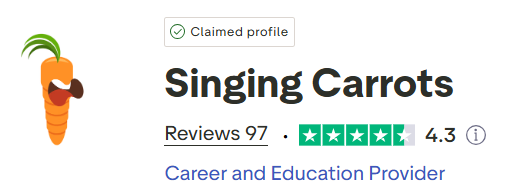
User feedback: Singing Carrots has a 4-star average rating on Trustpilot
Users praise its effectiveness:
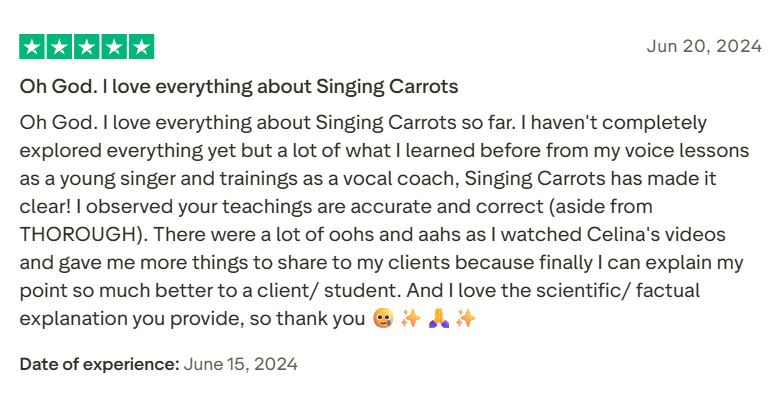
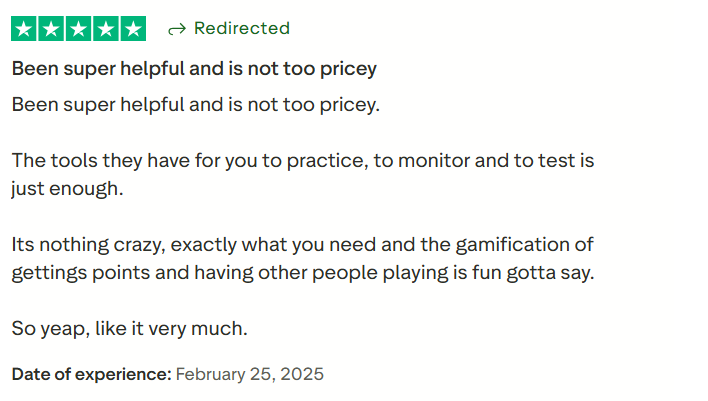
These reviews highlight the platform’s impact on real singers’ voices.
Best for: Singers who want a flexible, data-driven practice tool with personalized exercises and detailed progress tracking. Great for tech-savvy learners who love to self-improve and see their stats, and for those focusing on pitch accuracy and vocal range development. Also ideal if you value affordability – the cost is reasonable given the breadth of features, especially with long-term plans.
Not for: Someone looking for a multi-instrument app or those who need live one-on-one coaching. If you prefer a set daily curriculum with a single path (or if you get overwhelmed by options), you might initially find all the features in Singing Carrots a lot – though the structured courses do provide guidance. Overall, if you’re serious about improving your singing with tailor-made exercises, Singing Carrots is an outstanding choice.
2. 30 Day Singer – Structured Video Lessons for All Levels
30 Day Singer is one of the most popular online singing course platforms, known for its structured curriculum and multiple instructors. Despite the name, it’s not just a 30-day course – it offers hundreds of high-definition video lessons and exercises beyond the initial beginner program. New content is added regularly, covering fundamentals (breathing, pitch, tone) up to advanced techniques (runs, belting, etc.). The interface is user-friendly, and you can follow various lesson plans or instructors based on your interest.
Pricing: Subscription-based. $29.95 per month, or around $129 per year (which saves quite a bit if paid annually).. They often have promotions (e.g. first month for $1 or a 14-day free trial). There is no lifetime purchase option; it’s a pay-as-you-go model.
Pros:
- Comprehensive content: Huge library of tutorials on everything from basics to genre-specific styles. Users report a “plethora of informative content” and a well-structured program. Multiple coaches (male and female) provide different perspectives and techniques.
- Beginner-friendly structure: The “30 day” introductory course gives newcomers a clear daily plan to follow, which many find motivating. Lessons emphasize healthy singing habits and fundamentals.
- High-quality videos: Production value is high – clear audio/video, multiple camera angles, and on-screen graphics or lyrics when needed. It feels quite professional and easy to follow.
- Community and support: The platform includes a forum where you can ask questions. They also respond to user feedback; notably, the company has replied to 100% of negative reviews on Trustpilot, showing a willingness to help students who struggle.
- Money-back guarantee: There’s a 30-day refund policy (via ClickBank) if you’re not satisfied, which adds confidence to give it a try.
Cons:
- Lack of interactive feedback: Being video-based, there’s no real-time pitch detection or feedback while you practice. You must self-assess or post videos in the forum for feedback.
- Subscription costs add up: At ~$30/month, it’s not the cheapest if you stay long-term. Some users who don’t cancel after the trial have complained about being charged for months they didn’t use. You need to remember to cancel if it’s not for you (though the annual plan is more cost-effective if you use it continuously).
- Not one-size-fits-all: While many love the instruction, a few have found the teaching style either too fast-paced or not tailored enough for their needs. For example, one beginner noted “I tried the free trial… this course just wasn’t for me. I am an absolute beginner and the and the lack of real time feedback and the assumption that I could already pitch match was frustrating.” (2-star review) – indicating it may assume some basic knowledge. Advanced singers might also find much of the content covers ground they already know, since it targets a broad audience.
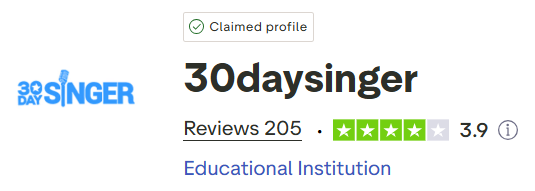
User feedback: 30 Day Singer holds a 3.9 out of 5 rating on Trustpilot, with the majority being positive. Users often praise the instructors: “This course is AMAZING! Camille – the teacher – is an angel with an ability to motivate and teach via video better than most”. Many report real improvement in their range and confidence over a few weeks. However, some criticize the marketing as overly optimistic (“become an amazing singer in only 30 days” is their slogan) – progress in a month is real but don’t expect miracles. Overall, the sentiment is that it’s a top-notch library of singing lessons, especially if you learn well from video instruction.
Best for: Those who want a clear lesson plan and multiple expert instructors. If you prefer a traditional teaching approach (instructor explains, then you practice on your own) and like having lots of video tutorials to binge or systematically work through, 30 Day Singer is an excellent choice. It’s great for beginners to get a strong foundation, and intermediate singers can jump into targeted lessons (e.g. vibrato, stage performance, song tutorials) to level up specific skills.
Not for: People who need interactive feedback or gamification to stay engaged. If you know you struggle to practice without real-time input (like knowing whether you’re on pitch), you might want to pair this with an app or tool that gives feedback (for instance, some users combine 30 Day Singer lessons with an app like Singing Carrots or a pitch app for practice). Also, if you’re on a tight budget and don’t want a subscription, a one-time purchase course might suit you better than 30 Day Singer’s ongoing fees.
3. Singeo – Modern Interactive Lessons with Community Feedback
Singeo is a newer platform (launched in 2021) dedicated to teaching singing online, and it’s part of Musora, the same family behind popular instrument sites like Drumeo and Pianote. Singeo combines on-demand video lessons with a strong community aspect. The lessons are led by charismatic instructors and are well-structured into courses and themes. What makes Singeo stand out is that you can upload recordings of yourself singing and get feedback from vocal coaches and peers in the Singeo community. It’s a bit of the best of both worlds: self-paced learning, but with the option for personalized feedback through their forum and periodic live Q&A sessions.
Pricing: $30 per month or $240 per year (which comes to $20/month). They offer a 7-day free trial to test it out. Notably, Singeo has a 90-day money-back guarantee – if you’re not satisfied in 3 months, you can get a full refund, no questions asked.
Pros:
- High-quality video lessons: Singeo’s content is professionally produced in HD, similar to 30 Day Singer and others. Lessons are organized into easy-to-follow modules, and each video is a reasonable length. Topics range from basics up to specialized skills, and new content is added regularly, including fun tutorials like popular song breakdowns or how to choose a microphone.
- Live events and community: They hold live Q&A sessions and even occasional live streaming lessons, which give a bit of real-time interaction. The community forum is a core feature – students are encouraged to post clips of their singing to get constructive feedback from instructors and other students. This builds accountability and a supportive network, making online learning less isolating. As one review put it, Singeo creates “a secure space for students to offer each other constructive feedback… adding a personalized touch that other platforms lack.”
- Multiple coaches & styles: While Lisa Witt is the main face, Singeo actually features various coaches for different styles (e.g., rock techniques, R&B runs, songwriting, etc.). You can choose whose lessons to follow or sample all. This variety keeps things interesting and caters to different musical tastes.
- Beginner-friendly and beyond: The platform explicitly welcomes complete beginners, but also has material for intermediate singers wanting to “brush up on vocal training you’ve already had.” Because it’s part of a larger music education company, they’ve put thought into a curriculum that starts from scratch (for those with zero experience) yet doesn’t talk down to those who have some background.
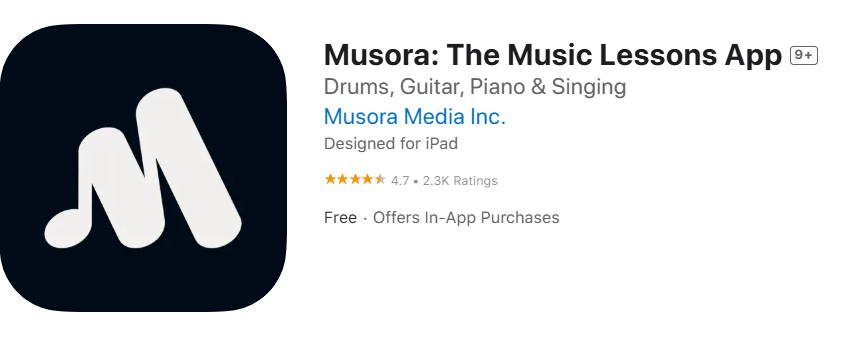
- Mobile app convenience: Singeo can be accessed via the Musora Music app, which has high ratings (4.8/5 on Apple App Store). This means you can learn on the go, and many users love practicing with the app on their phone or tablet. It’s stable and user-friendly, according to user reviews, with one calling it a “game changer” for the sheer amount of content available on the go.
Cons:
- Less gamified, more self-driven: Singeo is not a game or instant-feedback app. The onus is on you to apply what you learn in the videos. If you thrive on points and immediate scoring (like Yousician’s style), Singeo’s more traditional approach might feel “serious.” One expert review noted you do need self-discipline here, as with any self-led course. The platform tries to keep engagement through community and short lessons, but ultimately you must push yourself to practice.
- Teaching style may not suit everyone: Lisa Witt’s teaching style is very bubbly and quirky (singing Happy Birthday with full enthusiasm, etc.). Most find her encouraging, but a few might find it “a little cringe-worthy” if they prefer a more formal teaching style. It’s subjective – the vast majority enjoy her authenticity, but as one reviewer said, “her approach isn’t for everyone” even though the content quality is high. The good news is you can sample instructors during the trial to see if they click with you.
- Karaoke-style singing section: Singeo offers a “Sing-Along” library of songs, but reviewers were a bit disappointed here – many songs just use basic YouTube karaoke videos as backing tracks. This is a minor con (the core value is in the lessons), but if you expected a huge interactive song library like Yousician, Singeo’s song section is more bare-bones.
- No one-on-one coaching (beyond text feedback): While you can get feedback on your recordings, it’s not the same as a live lesson. The feedback is asynchronous (you post, someone replies later) and text-based, possibly with example clips. It’s very useful, but if you need a live personal trainer, you’d have to hire a coach separately or use a different service.
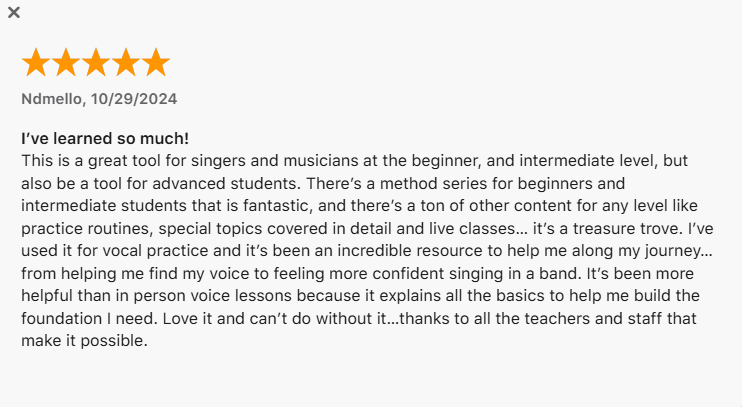
User feedback: Since Singeo is newer, it doesn’t have a ton of third-party reviews yet. However, its parent Musora’s reputation is strong. Users often mention how effective and well-structured it is: “It’s been more helpful than in-person voice lessons… from helping me find my voice to feeling more confident singing in a band.” App store reviews (4.7+ stars) praise the convenience and the sense of community.
Best for: Singers who want a balance of self-study and community. If you like the idea of a guided curriculum but also crave feedback on your progress, Singeo is fantastic. It’s like having a virtual classroom – you learn from pros through videos, and you have classmates and teachers available in forums for help. It’s especially good for those starting from scratch who want a supportive environment, or for anyone who finds motivation in being part of a learning community. Also, given the 90-day guarantee, it’s great for the indecisive – you can truly test it for a few months to see results without financial risk.
Not for: Those who need instant gratification or a gaming element to practice. Also, if you prefer a single legendary teacher or a very specific methodology, you might not connect with Singeo’s mix of coaches and styles. Singeo is not as “instant” as an app like Yousician when it comes to telling you if you’re right or wrong on each note – you have to rely on your ear or seek feedback after recording yourself. If that sounds like a downside and you’d rather have a computer judge your every note in real time, a more interactive app would suit you better. Otherwise, Singeo offers a well-rounded, human-centric online learning experience.
4. SingWell (Linor Oren) – Premium Hybrid Coaching & Deep Transformation
What it is:
SingWell is a high-touch online training ecosystem run by vocal coach Linor Oren. It blends on-demand courses with live group coaching and personal, asynchronous feedback. Compared with most platforms in this list, SingWell sits firmly in the premium tier—aimed at singers who want both mindset shifts and measurable vocal gains with frequent coach touchpoints.
Programs & Pricing (Online):
- Make Singing Click Club — $120/month
- Access to Make Singing Click (flagship course)
- 1 group lesson/month with Linor
- Up to 2 direct video feedback moments (asynchronous)
- Best for testing the waters with guided structure
- From Whisper to Roar (Premium) — $750/month or $4,000/6 months (paid upfront)
- Access to all courses (incl. Stage Fright, Yoga, etc.)
- 3 longer group lessons/month with Linor
- Unlimited asynchronous feedback (video/audio/text)
- Designed for a 6-month, goal-driven transformation (mental + vocal)
Why it stands out:
Where most online options are either video-only or tool-only, SingWell combines human coaching, community, and a full course library, with enough feedback volume to correct technique in near-real time (asynchronously) and keep you accountable.
Pros
- High coach access (especially in From Whisper to Roar)
- Structured path + live group lessons + asynchronous feedback
- Addresses technique and mindset (performance nerves, confidence)
- Premium accountability for ambitious goals
Things to consider
- Premium pricing reflects the level of coaching and access
- Scheduling group sessions adds structure (helpful for consistency, but less “drop-in” than pure self-study)
- Not a weekly 1:1 program—coaching is group-based plus robust async feedback
Best for:
Serious beginners to advanced singers who want hands-on coaching, clear goals, and accountability—especially if stage fright, mindset, or plateaued technique are holding you back.
Not for:
Budget-focused learners or those who prefer purely self-paced videos/apps without live commitments.
5. Yousician – Gamified App for Multiple Instruments (Including Singing)
Yousician ranks among today’s best online singing courses and music‑learning apps (available on mobile and desktop) that covers guitar, piano, bass, ukulele, and singing. Its singing section is structured as a guided, gamified course for vocal technique. The course is divided into five “levels” or missions, each focusing on different topics – for example, Level 1 checks your basic pitch matching and vocal range, Level 2 develops chest voice, and later levels introduce rhythm, sight-reading, interval training, and even harmony. Yousician’s interface is very interactive: when you sing along with the exercises or songs, the app uses your device’s microphone to provide real-time feedback, turning notes green when you’re correct and red when you’re off. This game-like system (with points, stars, and “lives” for practice songs) makes practice feel like playing a video game.
Pricing: Yousician has a free tier (limited lesson time and limited song selection per day). For full access, Premium plans are subscription-based. As of 2026, Premium (one instrument) is about $89.99/year ($7.49/month) and Premium+ (all instruments and full song library of 10k+ songs) is $139.99/year ($11.66/month). Monthly plans are available (~$14.99/month for Premium, $19.99 for Premium+) if you don’t want to commit annually. There is also a family plan for multiple users.
Pros:
- Highly engaging & fun: Yousician’s gamification is its standout feature. It feels like Guitar Hero for singing – you get instant gratification when you hit notes (and gentle “uh oh” moments when you miss). This keeps many beginners motivated to practice daily. A user review noted “Yousician is a fun, interactive and user-friendly app that encourages quick and easy learning.” The app rewards you with badges and tracks streaks, making practice addictive in a good way.
- Multi-instrument platform: If you are interested in learning guitar or piano along with singing, Yousician offers a one-stop solution. You can switch between instruments. For a musically curious person or a family, this breadth is a plus (e.g., one Trustpilot reviewer mentioned “My kids and I all started using Yousician… the tech is great and the catalog of songs continues to grow”.
- Instant pitch & timing feedback: The app listens as you sing and displays whether you are on pitch and in time, which is crucial for beginners training their ear. It even has a transposition feature – you can adjust the key of songs to better suit your voice on the fly. You can also slow down songs during practice and set difficulty levels for song exercises. This customizability helps match the app to your current ability.
- Structured curriculum: The singing course in Yousician is progressive. It introduces concepts step-by-step (from basic pitch matching to harder skills). Each exercise comes with instructional audio or video demonstrating what to do (e.g., how to breathe or place your voice). It’s like a game campaign for your voice. You also get additional “workouts” section for specific skills (sight-singing, breath control, ear training), which are pre-made drills you can do anytime.
- Large song library: With Premium+, you unlock 10,000+ popular songs in various genres. These are interactive – the lyrics and notes scroll, and the app listens as you sing along to validate your pitch. It’s a fun way to apply what you learn to real music. Songs are categorized by difficulty, so you can find something at your level.
Cons:
- Limited vocal-specific depth: Because Yousician caters to multiple instruments, its singing program is a bit less specialized. Some nuances of vocal technique might be overlooked in favor of a more general approach. For instance, the app can tell you if you hit the note, but it won’t tell you if your vowel was spread or your posture was off – things a human vocal coach would catch. The feedback is basic (note hit or miss); there’s no detailed explanation of why you were off (too high? too low? wrong timing?). This frustrated onereviewer, who noted “at times it was unclear what the mistake was – pitch or timing? I do not get that information from the course.”
- Exercises not customizable: Yousician’s vocal exercises are fixed. You cannot change the starting note of a scale or the speed beyond the provided settings. The Singing Carrots team pointed out “Musician’s exercises are fixed. You can’t change the starting notes or customize intervals…you simply practice what’s given.” In contrast, some competitors let you tailor exercises to your range or slow down a tricky part. So if an exercise is too high or too fast, you have to “manage” as is.
- Mixed accuracy of the app’s scoring: While generally good, the app’s pitch detection isn’t perfect. A user review on Trustpilot complained “the sound recognition is awful… It won’t pick up certain notes… not worth it if you can’t play with it”. Such issues seem more common with instruments (like guitar on certain frets) than voice, but it indicates technology isn’t foolproof. Sometimes you might feel you sang correctly but the app didn’t register it.
Subscription model and upsells: The free version of Yousician is very limited (you hit a time limit quickly). To really use it, you’ll need Premium, and the app does push the upgrade fairly often. Also, the full song library is only in Premium+ (higher cost). Some users find the pricing a bit high, especially if they only want the singing portion. And if you’re only interested in singing, the very gamey interface (with cartoonish elements and non-vocal content) might feel distracting or less serious.
User feedback: Yousician is generally well-rated with a 4.6/5 TrustScore on Trustpilot from thousands of users.
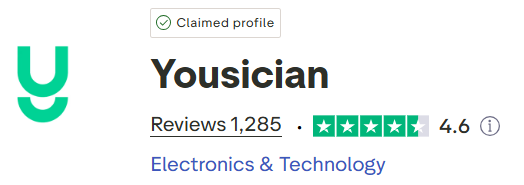
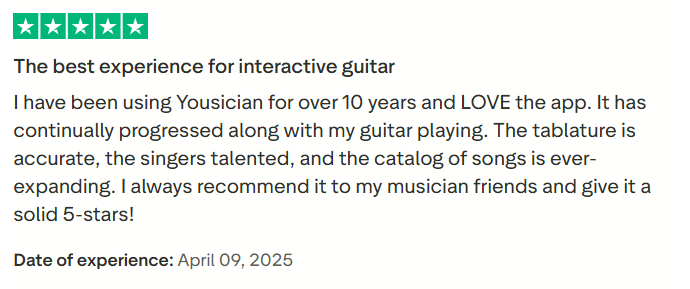
Many appreciate its fun factor and how it got them into a regular practice habit. One long-time user wrote, “I have been using Yousician for over 10 years and LOVE the app… the catalog of songs is ever-expanding. I always recommend it”. However, vocal students specifically often mention that it’s best as a practice supplement rather than a sole teacher.
Best for: Beginners who want a fun, game-like introduction to singing. If you love the idea of an app that makes practice feel like a game – and especially if you also play an instrument – Yousician is perfect. It’s also a good choice for kids or teens due to its engaging interface. The structured lessons and instant feedback will definitely help anyone improve their pitch and rhythm in the early stages. It’s essentially “learn to sing by playing a game”, which can be way less intimidating than traditional lessons.
Not for: Singers seeking advanced technique training or personal critique. If you’re looking to deeply refine your vocal tone, expand your upper range with proper technique, or get feedback on your stylistic choices, Yousician alone may not be enough. Also, if you prefer a serious, instructor-led vibe (instead of animations and games), you might find Yousician too casual. Additionally, Yousician’s exercises are designed for a generic voice type — they’re not customizable to your specific range or voice profile. So unless your voice happens to match their preset patterns, some exercises may feel too high or too low. If you want to make sure every exercise is tailored to your voice, Singing Carrots offers adjustable, range-specific training. Lastly, those on a tight budget might stick to the free version or a one-time purchase course, as Yousician’s full access requires ongoing payment. Lastly, those on a tight budget might stick to the free version or a one-time purchase course, as Yousician’s full access requires ongoing payment. Consider trying the free tier first; if you find yourself motivated by it, it could be worth the subscription.
6. Cheryl Porter Vocal Method – Fun and Motivational Coach‑Led Course
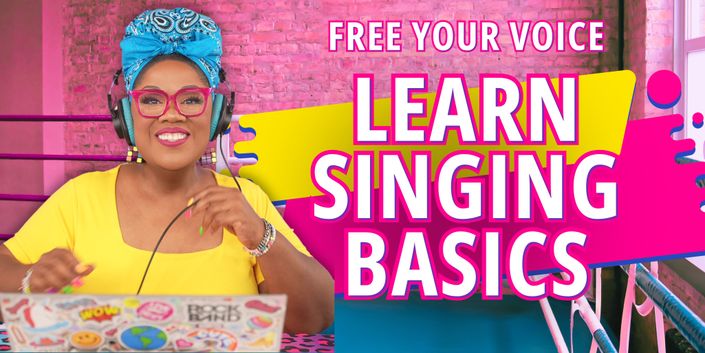
Celebrity vocal coach Cheryl Porter has made a huge splash on YouTube with her energetic vocal workouts (often done while wearing her signature headscarf and giving joyous encouragement). She has turned that same energy into her Cheryl Porter Vocal Method, available online as a set of structured video courses. The program includes several themed courses (such as Free Your Voice, Singing From Scratch, and Hit Those High Notes) and bundle options that package them together. Cheryl’s program is video-based – you get access to dozens of exercise videos where she leads you through various vocal drills, often with backing tracks. The emphasis is on practical exercises (scales, riffs, breathing, etc.) done in a call-and-response style: Cheryl sings or plays a pattern, and you sing it back. The vibe is extremely enthusiastic; Cheryl basically becomes your personal cheerleader through the screen.
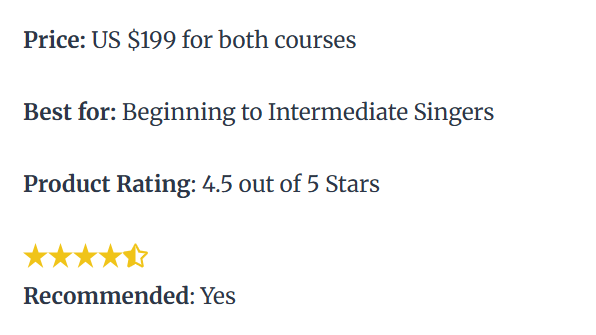
Pricing: Cheryl Porter’s courses are now sold individually and as a bundle. Each of the five main video courses — Free Your Voice, Singing From Scratch, Boom! The Big 10!, Hit Those High Notes!, and Vocal Agili-TEA — can be purchased separately for about $49 each (lifetime access, often shown as discounted from a higher list price). Most students, however, opt for the “Mama Cheryl’s Big Bundle,” which includes all five courses plus a 10-minute Vocal Workout bonus. The bundle is currently offered for $149 as a one-time payment with lifetime access, making it the most comprehensive option. In addition, Cheryl offers a separate membership program called the Online Singing Academy, which is not a course but a 6-month subscription giving access to live monthly masterclasses, guest vocal coaches, Q&A opportunities, and a private community. This membership is priced at $99 for six months (discounted from $259). Taxes or VAT may apply at checkout depending on location.
Pros:
- High energy motivation: Cheryl Porter’s teaching style is incredibly positive and motivational. She’s famous for her catchphrases and upbeat attitude. For students who struggle with confidence, having such an encouraging coach can be a game-changer. Many users find her lessons fun and not boring at all – it’s like working out with an inspirational trainer. This fun factor can keep you practicing daily.
- Well-rounded exercise program: Cheryl’s method covers all the main voice areas – chest voice, head voice, mix, belting, even whistle register. The exercises target power, agility, range, and control. It’s a very workout-based approach: you will be doing lots of scales and riffs along with her. This kind of repetitive training is what builds muscle memory. One review remarked it’s a “proven and effective vocal training system” that includes over 90 exercises and multiple genres.
- Covers advanced techniques: Unlike some beginner courses, Cheryl doesn’t shy away from challenging stuff. She has exercises for whistle tone, runs, belting – techniques often considered advanced. So you’re not just getting “sing Twinkle Twinkle”; you’re getting the kind of drills a serious singer would do to expand their abilities. For instance, many of her students are aspiring gospel/R&B singers working on big belting and riffs, and her content caters to that as well as to beginners.
- Reasonably priced (for the content): Cheryl’s courses are offered as lifetime-access purchases, which means once you buy them, you keep them forever. Individual courses cost around $49 each, while the complete bundle of five courses is $149, making it a cost-effective way to access her full training library. Considering that private vocal lessons with a coach of her level can cost $50–$100 per hour, Cheryl’s method is positioned as an affordable long-term investment. On top of that, for those who want ongoing support, her Online Singing Academy membership ($99 for six months) adds live masterclasses and community access. Many reviewers highlight the value of being able to revisit the material any time, describing it as “very reasonably priced for the amount of content and motivation you get.”
- Great for ear and pitch training: Doing exercises with a piano and backing tracks (and Cheryl’s voice) can really develop your ear. Because there’s no visual pitch graph, you rely on listening closely. Over time, many students report better pitch accuracy and a wider range thanks to daily drills. Essentially, it’s like having a personal coach guide your practice – if you put in the work, you will see results, as countless YouTube “before and after” testimonies show.
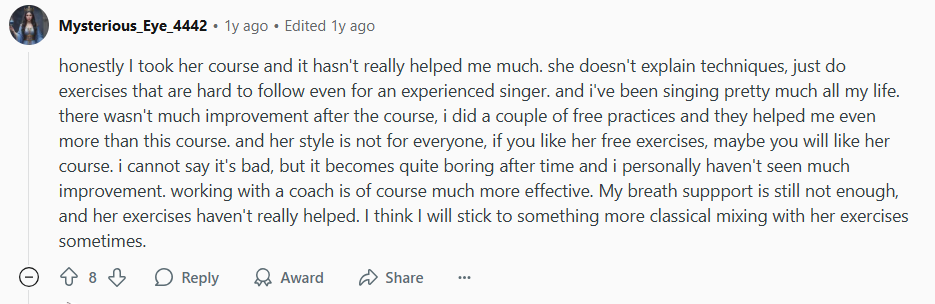
Cons: Not much theory or explanation: Cheryl’s method is more “learn by doing.” She doesn’t break down a lot of vocal science or give lengthy lectures on technique. Some learners, especially analytical ones, might feel they’re just copying exercises without fully understanding the mechanics. One Reddit user who took her course said, “she doesn’t explain techniques, just [gives] exercises… I haven’t seen much improvement”. For those who want in-depth explanations of formants, breath support mechanics, etc., this course might feel lacking in technical instruction.
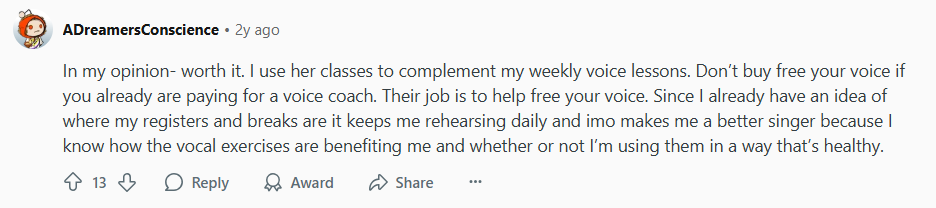
- No personalized feedback: The course is pre-recorded video. There’s no built-in feedback on whether you’re doing it right. Cheryl is not reviewing your exercises or hearing you sing. So if you have a bad habit, you might not know from these videos alone. It requires you to self-assess or ideally get a vocal coach at some point to check your technique. The course is best used as a supplement to practice, as one Redditor noted they use it to complement their weekly live lessons.
- High-energy style “not for everyone”: While many love Cheryl’s enthusiasm, a few people find it “too hypey” or even a bit exhausting. If you prefer a calm, methodical teacher, Cheryl’s cheerleader approach might not click with you. The exercises can also feel physically tiring – she’ll have you doing fast-paced drills that can leave you breathless. Some experienced singers found it “boring after a time” or repetitive, especially if they were beyond the level of some exercises. Essentially, it’s like an intense workout – great for some, not enjoyable for others.
- Pre-recorded vs. live confusion: Some buyers initially thought they might get live Zoom classes with Cheryl – but everything is pre-recorded. Cheryl does not provide one-on-one sessions as part of this course. A Reddit comment pointed out that the website wasn’t super clear that it’s not live, which led to a bit of disappointment for someone who expected virtual classes. So to set expectations: you’re buying videos, not live time with Cheryl.
User feedback: Cheryl Porter’s courses have generally positive feedback. Many beginner and intermediate singers rave about improved range and confidence. The fun factor keeps people coming back daily. On the flip side, advanced singers or those who prefer theory often say they needed something more technical after using Cheryl’s course. There is also a sentiment that “her style is not for everyone” – if you enjoy her free YouTube warm-ups, you’ll likely enjoy the course, because it’s more of that but structured; if you don’t vibe with her YouTube persona, you probably won’t like the course either. In terms of ratings, one vocal coach’s review gave it 4.5/5 stars for being innovative and inspiring.”
Best for: Singers who need motivation and a structured practice routine. If you find practicing on your own hard and need someone to “pump you up,” Cheryl is your coach. It’s great for all levels in the sense that beginners will feel welcomed by her warmth, and more experienced singers can use it as a workout to stay in shape (Cheryl herself says even pro athletes have coaches/trainers – think of her course like a gym for your voice). It’s especially useful for contemporary styles like pop, R&B, gospel, where belting and powerful vocals are prized – Cheryl’s approach shines there. Also, if you’re shy or lack confidence, Cheryl’s constant encouragement can really help you break out of your shell over time.
Not for: Those who want a lot of explanation or live feedback. If you’re very analytic and want to know the “why” behind every exercise, you might get frustrated that Cheryl just asks you to do it and cheerfully says “good job!” without dissecting it. Similarly, if you have an ingrained bad habit, this course on its own won’t correct you – you’d need outside feedback. It’s also not ideal for someone who dislikes high-energy workouts or prefers classical style training; Cheryl’s method is modern and upbeat, so a classical singer might opt for something like Roger Love or Ken Tamplin’s courses instead. All in all, the Cheryl Porter method is a powerful tool – but like any exercise regimen, it depends on the user’s commitment and preference for style.
7. Ken Tamplin Vocal Academy (KTVA) – Intensive Rock/Pop Vocal Training

Ken Tamplin is a vocal coach and rock singer renowned for his powerful technique and bold motto: “How to Sing Better Than Anyone Else.” His flagship course, now in its 3.0 version, offers over 500 streaming lessons, daily practice plans, PDF workbooks, and access to an active student forum with over 20,000 users. This deep-dive, technique-heavy program walks singers through diaphragmatic support, open-throat resonance, vowel modification, and more. Ken’s teaching style is direct, technical, and performance-driven, with the expectation that dedicated practice is essential to seeing real improvement.
Pricing: The primary path to the 3.0 course is via a streaming membership: join for $149 one-time, then continue at $19.95 monthly, or choose the annual plan for $299/year with no enrollment fee. All versions include lifetime access as long as the subscription remains active. For those preferring physical media, the complete 3.0 course on USB (including 90 days streaming of Volume 1) is priced at $899. Legacy 2.0 versions are still available: $199 for instant download, or $269 for USB delivery.
- Powerful results for those who follow it: Many dedicated students report dramatic improvements in range, power, and stamina. Ken’s methods are based on tried-and-true bel canto and rock techniques that do build powerful voices when done correctly. If you stick with it, you can gain an octave or more in range and learn to belt safely – achievements many rock/pop singers are looking for.
- Extensive content and exercises: The course is quite massive – lots of video lectures, tutorials, and audio workouts. Ken provides exercises for different vowels, scales, and songs. It’s a 12-Week program on paper, but most students keep working with the materials well beyond that. You will never lack for exercises to practice. Also, the higher-tier packages include things like webinars, advanced techniques, and access to new updates.
- Technical depth: Ken dives into vocal anatomy and technique details more than some other courses. He explains concepts like support, throat shaping, placement, etc., often with visual aids or analogies. If you like understanding the mechanics, you’ll appreciate his thoroughness. It’s not superficial at all – some might even say it’s overwhelming (a pro for serious learners).
- Community support: Enrolling in KTVA gives you access to a private students’ forum where you can post clips of your singing and get feedback from certified moderators (and sometimes Ken himself). This is a valuable resource – it’s like having a built-in critique group to ensure you’re applying the techniques right. A lot of progress logs and success stories on the forum show the transformation of voices over time, which is inspiring.
- Focus on rock/pop performance: If your goal is to sing rock, gospel, R&B, or pop with grit and power, KTVA is tailored for that. Ken teaches you how to get distortion safely, how to belt high notes that cut through, and how to build a robust chest voice. He himself has a very powerful voice and demonstrates everything – so you know the potential outcome. Few other courses showcase such high-caliber rock vocals in the teaching (some courses avoid demanding styles, whereas Ken embraces them).
Cons:
- Very demanding practice regimen: Ken often says “It’s the singer, not the course.” In other words, buying it isn’t enough – you have to put in serious work. The exercises can be lengthy and challenging. Some folks might find it hard to keep up or get discouraged if progress is slow. You need patience; results won’t come overnight. If you’re not ready to practice almost daily, this course could end up gathering dust.
- Ken’s teaching style: Ken has a confident, at times brash personality (fitting for a rock coach). He’s very sure of his method, occasionally dismissive of other methods. Some students love his bold style; others might find it off-putting or overly intense. He can talk at length on topics, which might be too much info for certain learners who just want quick tips. Essentially, he’s a “larger than life” kind of coach – which can inspire or overwhelm depending on the person.
- Higher price point: The cost is notably higher than something like Singorama or even a year of 30 Day Singer. While many argue it’s worth it for the depth of content, the price can be a barrier for singers on a budget. Not everyone is ready to drop a few hundred dollars at once on a course. There are occasional sales or options to split payments, but it’s still one of the pricier options out there.
- Not beginner-oriented in tone: Although beginners can start KTVA, some absolute beginners might find it a bit intense or technical. Ken expects students to learn terms and do homework. If someone just wants casual hobby singing improvement, they might not resonate with KTVA’s serious, “singer in training” vibe. Also, if you’re interested in classical or very light singing only, this course’s focus on robust sound might not align with your goals (Ken’s all about big voice singing).
- Potential strain if misapplied: With any rigorous vocal training, there’s a risk: if you misunderstand or misapply techniques, you could strain your voice. Ken provides warnings and guidance on doing things safely, but without an in-person coach, a few students have reported fatigue or strain trying to belt like Ken too soon. The forum helps mitigate this by correcting people, but it requires self-awareness. So, caution and gradual progress are key – you must follow instructions and not push beyond your ability prematurely.
User feedback: KTVA often polarizes people: you’ll hear glowing reviews from successful students and skepticism or criticism from others. On the positive side, we have many users across forums saying it transformed their voice and was the best investment they made in singing. It’s particularly lauded by rock and metal vocalists who needed to learn how to scream or rasp safely. On the other side, some vocal coaches criticize Ken’s marketing (again, big claims like “better than anyone else”) and point out that Ken’s own singing style may not appeal to everyone. One thing is clear: those who stick with it for a year or more tend to be very happy with their progress. In sum, KTVA has a strong track record, but you get out what you put in.
Best for: Aspiring singers (especially in rock/pop genres) who are serious about developing a powerful voice and are willing to practice diligently. If you idolize singers with big ranges and killer high notes – think Freddie Mercury, Aretha Franklin, Steven Tyler – and you want that kind of capability, KTVA is designed for you. It’s also great if you want a lot of technical knowledge and a structured path to build your voice from the ground up. People who love a no-nonsense, almost “coach at the gym” approach will thrive with Ken’s method. Also, if you value being part of a dedicated community of singers working on the same program, the KTVA forum provides that camaraderie and support.
Not for: Casual learners or those who prefer a light, game-like learning experience. KTVA is not very “lighthearted” – it’s more like enrolling in a serious vocal bootcamp. If you just want to sing a bit better for fun with minimal effort, you might find this course overkill. It’s also not the cheapest, so if budget is a concern and you’re not sure you’ll commit, you might explore cheaper options first. Additionally, if you’re focused on classical singing or just karaoke-level improvement, a gentler course might serve you better. Ken’s method is effective, but it demands respect for the craft. For those ready to truly train, it can unlock your potential; for those not ready, it can be too much, too soon.
8. Simply Sing – Range‑Adaptive Karaoke Practice for Casual Singers
Released by the makers of Simply Piano, Simply Sing is a mobile karaoke-style app that adapts songs to your vocal range and provides instant pitch feedback. It’s ideal for beginners who want a playful, confidence-boosting way to sing their favorite songs without strain.
Pricing: Free to download with an initial song selection, but full access requires a premium subscription ($14.99 per month, or $89.99/year, billed annually). They often run promotions (for example, $5/month with annual plan for the first year). A free trial (usually 2 weeks) is available for new users to try the entire song library
Pros:
- Personalized Range Adjustment: Automatically transposes songs to your unique vocal range, making it easier to hit high or low notes without discomfort.
- Fun, Gamified Learning: Offers a variety of popular songs (with new ones added weekly) and game-like exercises. It shows lyrics with cues for when to hold notes and breathe, helping you build skills in a playful way.
- Beginner-Friendly & Confidence-Building: Great for casual singers – many users, including kids, found it boosted their confidence to sing songs they never thought possible by matching songs to their ability.
- Affordable (Free Content): Unlike some music apps, Simply Sing launched with a generous free version – no “VIP” paywall for basic use. You can practice several songs and fundamentals without paying, which users appreciate. (Subscription is only needed for full song catalog and advanced features.)
Cons:
- Limited Song Catalog: The song library, while growing, is still relatively small and biased towards popular hits. Some users wish for more variety (e.g. more genres, musical theater songs).
- Premium Paywall After Trial: The app’s free content is somewhat limited – after a few songs or days, most content sits behind a subscription paywall. Several users felt it was a “bait and switch” that you must pay to access virtually all songs.
- Technical Glitches: A few users reported timing issues where the lyrics or backing track were out of sync, making it hard to sing along. This can be frustrating until fixed.
- Lacks Advanced Training: While fun for beginners, it’s not a comprehensive vocal training program – no in-depth vocal exercises or personalized coaching beyond pitch-matching. Advanced singers looking for technique drills or range expansion exercises might find it too basic.
User Feedback: Overall, Simply Sing earns praise from casual singers. Many love that “finally songs can suit my voice” and find it “very fun… it has helped me sing better on higher or lower pitches”. Users especially enjoy not being forced to perform publicly – “it didn’t video you and post it… AND NO VIP NEEDED! COMPLETELY FREE!”. The app’s approach of matching songs to the singer’s range has made some feel they “unlocked something” in their voice. However, more serious vocalists have criticized the limited content and the subscription model.
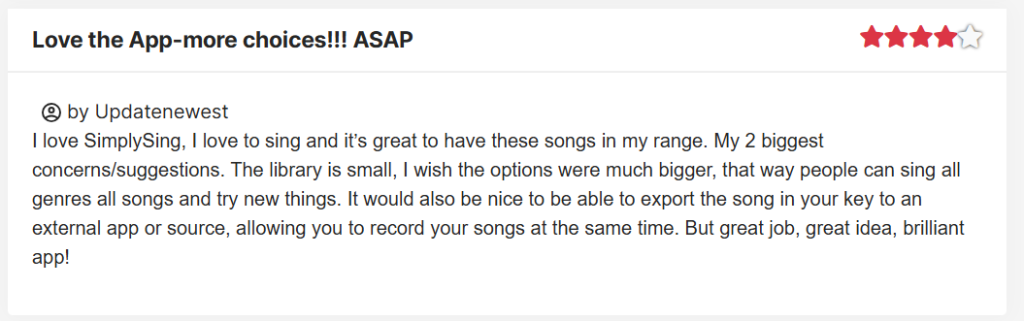
On Reddit, some argued the song selection was too small for the price, calling the app “not worth it… may be worth $5 a year, not $15/month”. Others noted the lack of depth: it’s fun for karaoke-style singing, but not a substitute for real lessons or larger training programs. In short, Simply Sing is great for casual practice and confidence, but you’ll need other resources to truly develop robust vocal technique.

Best for:
Beginner and casual singers looking for a fun, low-pressure way to practice. Great for building confidence, especially for those intimidated by traditional lessons. Also ideal for kids, teens, and families who want to enjoy singing popular songs at home. The automatic key adjustment makes it accessible to a wide range of voices.
Not for:
Advanced singers or those seeking structured vocal training. The app lacks in-depth technique development, personalized coaching, and a wide genre selection. Users looking for a large song library or serious vocal progression may find it too limited.
9. Singorama – Audio ‑Based Course with Big Promises
Singorama is a bit of a veteran in the online singing course scene. It’s a comprehensive downloadable course created by Australian singer Melanie Alexander. Rather than a modern app or membership site, Singorama is sold as a one-time purchase package (you download audio lessons, PDFs, and software). The program guides singers from basic breathing and pitch exercises to more advanced topics like harmonizing and even songwriting. It’s essentially a collection of audio lessons (MP3s) and exercise tracks, plus workbooks. There are also some software tools included, like a “Perfect Your Pitch” trainer and a mini recording studio program, which were nice bonuses back in the day. The course has been around for years, so it does have success stories, but its presentation feels a bit dated.
Pricing: $67 one-time. This price gives you lifetime access to all materials. There’s also a 60-day money-back guarantee. Importantly, once purchased, you have the files forever, and there are no recurring fees.
Pros:
- Affordable, one-time purchase: At under $70 for a complete course, Singorama is one of the most budget-friendly structured courses. You pay once and get a ton of material. As one review noted, “At such a low price, it is also one of the most affordable online singing courses with a healthy amount of content included.” If you dislike subscriptions and just want a set of lessons to own, this is appealing.
- Clear lesson structure: Despite being audio-based, the course is logically organized. It spans 6 weeks in its suggested schedule, with each week focusing on certain skills. This can keep you progressing step by step. Topics include vocal warm-ups, technique, increasing your vocal range, music theory basics, and even stage performance tips. Many beginners have found it a “good introduction to singing” that covers all the bases
- Practice tools included: The “Perfect Your Pitch” software is an interactive game where you guess if notes are higher or lower – helpful for ear training. The mini recording studio software allows you to record your voice over instrumental tracks. These extras, while a bit old-school, add value by reinforcing skills through practice.
- Offline access: Because you download everything, you don’t need internet after that. You can practice anywhere, anytime, and put the tracks on any device. Some users appreciate not being tied to a login or streaming, especially if their internet is slow or if they want to practice away from screens.
Cons:
- Outdated format and site: Singorama’s website and marketing come across as outdated and “salesy.” Indeed, the sales page is a long, hyped-up sales letter which some might find off-putting or even suspicious. This also makes it harder to find specific info quickly; you have to read through a lot of text.
- Audio only, no video: There are no video lessons at all in Singorama. All instruction is via audio. For visual learners, this is a big drawback – you can’t see a coach demonstrating breathing or jaw position, etc. You must rely on listening and reading the text instructions. In an era where most courses have video, Singorama feels behind the times in this aspect.
- Limited interactivity: There’s no feedback mechanism. Since it’s a set of recordings, you won’t know if you’re doing the exercises correctly unless you have a good ear or a teacher outside the program. There’s also no community or official support forum. It’s a solo experience. Some users have noted that they wished for at least some visual pitch tracking or ability to slow down exercises – but the tracks are fixed. If an exercise is fast or in a tricky key, you have to handle it as is.
- Marketing hype: Singorama’s marketing claims “fast results” that many voice teachers would say are unrealistic. This has led to skepticism, and indeed some buyers felt the results didn’t live up to the hype in the advertised timeframe. One Reddit user mentioned “the Singorama sales pitch is sooo cringy… you can’t learn to sing that well in a matter of weeks”. So, take the marketing with a grain of salt – you will improve if you practice, but it’s not magic.
- Lack of reviews/credibility indicators: Unlike many competitors, Singorama doesn’t have a lot of external ratings or presence (no active Trustpilot profile with reviews, etc.). One independent review even raised security concerns due to the lack of transparency and the old-style sales approach. While it’s not a scam (it is a real product that delivers what it says, and you can get a refund via ClickBank if needed), the presentation might make some cautious buyers uneasy.
 So, take the marketing with a grain of salt – you will improve if you practice, but it’s not magic.
User feedback: Singorama has a more mixed reputation. There are positive testimonials on its site. The users liked having all materials in one package and being able to go at their own pace. However, others echo that they missed having video or any kind of feedback. A common sentiment is that Singorama is good for self-motivated learners on a budget, but you might want to pair it with other resources (like YouTube videos demonstrating techniques, or an app for pitch feedback). The Trustpilot rating is essentially absent (it’s not a widely reviewed company there), and one blog review even ranked it last place due to the concerns mentioned. So, it’s a bit of a “buy at your own discretion” situation: many have benefited from it, but it’s not as sleek or interactive as modern alternatives.
Best for: Someone who prefers a low-cost, one-time investment and doesn’t mind an old-school approach. If you’re the type who can listen to audio instructions and diligently practice on your own, Singorama can work for you. It’s especially suitable if you have a tight budget (no recurring fees) or unreliable internet (since you can use it offline). Also, if you’re a bit tech-averse and would rather just have MP3s you can play on a stereo or phone without logging into an app, Singorama provides that simplicity.
Not for: Those who need visual and interactive learning. If you know you learn better by watching a coach or getting feedback on your singing, Singorama will likely fall short. It’s also not ideal if you crave a modern user experience – the lack of video and an interactive app might make it feel dry compared to other offerings. And if marketing hyperbole turns you off, you might be skeptical of Singorama from the start (though underneath the hype, it is a legitimate course). In summary, Singorama is an option for self-learners who just want a straightforward set of lessons to follow, but it may not excite everyone in 2026’s era of apps and high-tech tools.
10. MasterClass: Christina Aguilera Teaches Singing – Inspirational Artist Insights
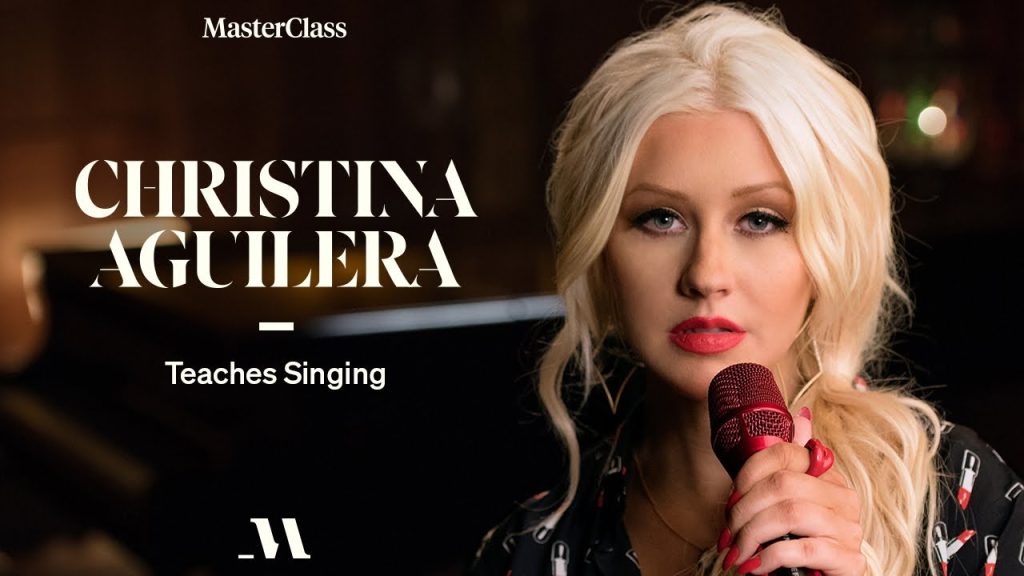
MasterClass offers an online course where Christina Aguilera (the Grammy-winning pop/R&B singer) teaches singing. This course consists of 23 pre-recorded video lessons (about 3.5–4 hours total) in which Aguilera shares her vocal techniques, artistry, and advice. All lessons are professionally filmed with high production values, and you get a 46-page downloadable workbook that summarizes key points and exercises for each lesson.
Pricing: You can access this class only via a MasterClass subscription, which is billed annually (approximately $15/month, paid as ~$180 upfront for one year). The subscription unlocks unlimited access to all MasterClass courses, not just Christina’s. (There’s no option to buy the class standalone anymore, though MasterClass provides a 30-day money-back guarantee if you’re not satisfied.)
Pros:
- Exceptional Video Quality & Presentation: As with all MasterClass offerings, the videos are beautifully produced in Full HD with a sleek, user-friendly interface. It feels like a polished documentary or private lesson, which keeps you engaged and inspired.
- Insights from a Superstar: You get personal tips and stories from Christina Aguilera, a world-class vocalist. She demonstrates her signature techniques (like runs, vibrato, belting, and growls), discusses how she emotionally connects with songs, and shares experiences from her career. This behind-the-scenes perspective is hugely inspirational for fans of Christina and pop/R&B singers.
- Student Coaching Sessions: Uniquely, several lessons show Christina coaching real students through songs – for example, she mentors singers on how to perform her hits “Beautiful”, “Fighter”, “Genie in a Bottle,” etc. Watching her give live feedback to other singers provides practical examples of technique and performance adjustments in real time.
- Workbook and Community: The included class workbook is a valuable supplement – it outlines lesson summaries, assignments, and practice schedules (with space for your notes). There’s also an online MasterClass community forum for the course, where you can discuss lessons and share progress with fellow learners. These help you stay organized and motivated as you work through the material.
Cons:
- Lacks Depth in Technique Training: Despite covering various vocal concepts, the course does not provide step-by-step technical instruction for each technique. Christina often demonstrates skills (like riffs or vibrato) without deeply explaining how beginners can physically achieve them. This “watch me and try it” approach can leave novice singers inspired but unsure how to replicate her abilities. In fact, only about 13 of the 23 lessons focus on vocal technique – the rest are about her personal journey, style and inspiration.
- Narrow Genre Focus: The training is heavily oriented toward Christina’s style of music (pop, soul, R&B). It doesn’t delve into other genres or classical technique. If you’re looki. Likewise, advanced vocal methods (like extensive warm-ups or exercises for expanding range, improving breath support in detail, etc.) are not the focus here.
- High Cost for Single Course: For those only interested in singing, the MasterClass subscription is pricey. Paying ~$180/year is hard to justify if you only use it for this 4-hour course. (By comparison, dedicated singing programs often cost less and include far more hours of instruction.). The value is better if you also watch many other MasterClasses on the platform, but as a standalone singing course it’s expensive.
- No Personal Feedback: The MasterClass is a one-size-fits-all set of videos – there’s no live interaction or individualized critique on your singing. You can post in the community, but Christina Aguilera isn’t going to personally coach you beyond what’s shown in the recorded videos. This limits the course’s usefulness for singers who need help correcting their specific technique issues.
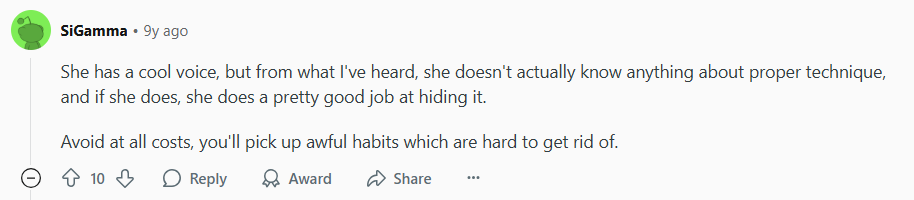
User Feedback: Learners generally describe Christina Aguilera’s MasterClass as highly inspiring but not very instructive. On the positive side, fans loved the intimate feel of the lessons – it’s like “spending personal, insightful time with Christina,” hearing her artistic approach and vocal advice firsthand. Many appreciated the sections where she breaks down how she interprets songs and the passion she conveys, which can motivate students to be more expressive. The footage of her coaching other singers is frequently cited as a highlight, showing real-world examples of applying techniques. However, a number of users (especially those with some training) were disappointed that “she isn’t really teaching anything new” technique-wise. They point out that Christina mostly showcases what she can do or gives broad tips, without providing a clear method for learners to improve their own vocal technique. On Reddit, some experienced singers even cautioned beginners against relying on it: “Avoid at all costs, you’ll pick up awful habits” if you mimic her stylistic singing without proper foundation.
Critics tend to agree that this MasterClass is “more entertainment than education,” useful as inspiration or an insider look at a star, but not a replacement for formal voice training or a structured course for serious improvement. In summary, Christina’s MasterClass is beautifully produced and motivating, best suited for fans and casual learners who want to be inspired by a legend – but if you need concrete exercises and vocal coaching, you’ll likely need to supplement it with other singing lessons.
Best for:
Fans of Christina Aguilera and casual learners who want inspiration and insight from a world-famous vocalist. Great for those interested in pop and R&B styles, or singers looking to improve their emotional connection and performance delivery. Also suited for creative minds who enjoy learning through stories and artist perspectives rather than technical drills.
Not for:
Beginners who need structured, step-by-step vocal training or anyone seeking hands-on technique development. If you’re looking to build vocal range, breath support, or improve tone through exercises and feedback, this course won’t provide that. Also not ideal if you’re on a tight budget and only want one singing course — the subscription cost is high if you’re not using other MasterClass content.
Conclusion: Choosing the Right Singing Course
All these online singing courses have their strengths and cater to slightly different needs. Your choice should depend on your goals, learning style, and budget. For a fun gamified introduction, apps like Yousician are great. If you want a deep library of lessons with guidance, 30 Day Singer or Singeo provide structured paths. Those on a tight budget might opt for a one-time purchase like Singorama, while anyone seeking a motivational boost could love Cheryl Porter’s style. Ambitious singers aiming for the stars in vocal performance might invest in rigorous programs like Ken Tamplin’s. Importantly, our top pick Singing Carrots stands out for its personalized, interactive approach – an excellent all-around choice for developing your voice with measurable progress over time. It combines many of the best features (custom exercises, feedback, flexibility) in one platform.
Remember, no course can work miracles without your effort. The best course is one that keeps you engaged and committed to practicing regularly. Fortunately, most of these options offer free trials or money-back guarantees. We encourage you to try one that resonates with you – stick with the exercises, and you’ll surely hear the improvement. Happy singing!

Unleash 1 Million Voices – Singing Carrots Mission
Hi. I’m Sergey, founder of Singing Carrots. I’m on a mission to unleash one million voices. Bu…
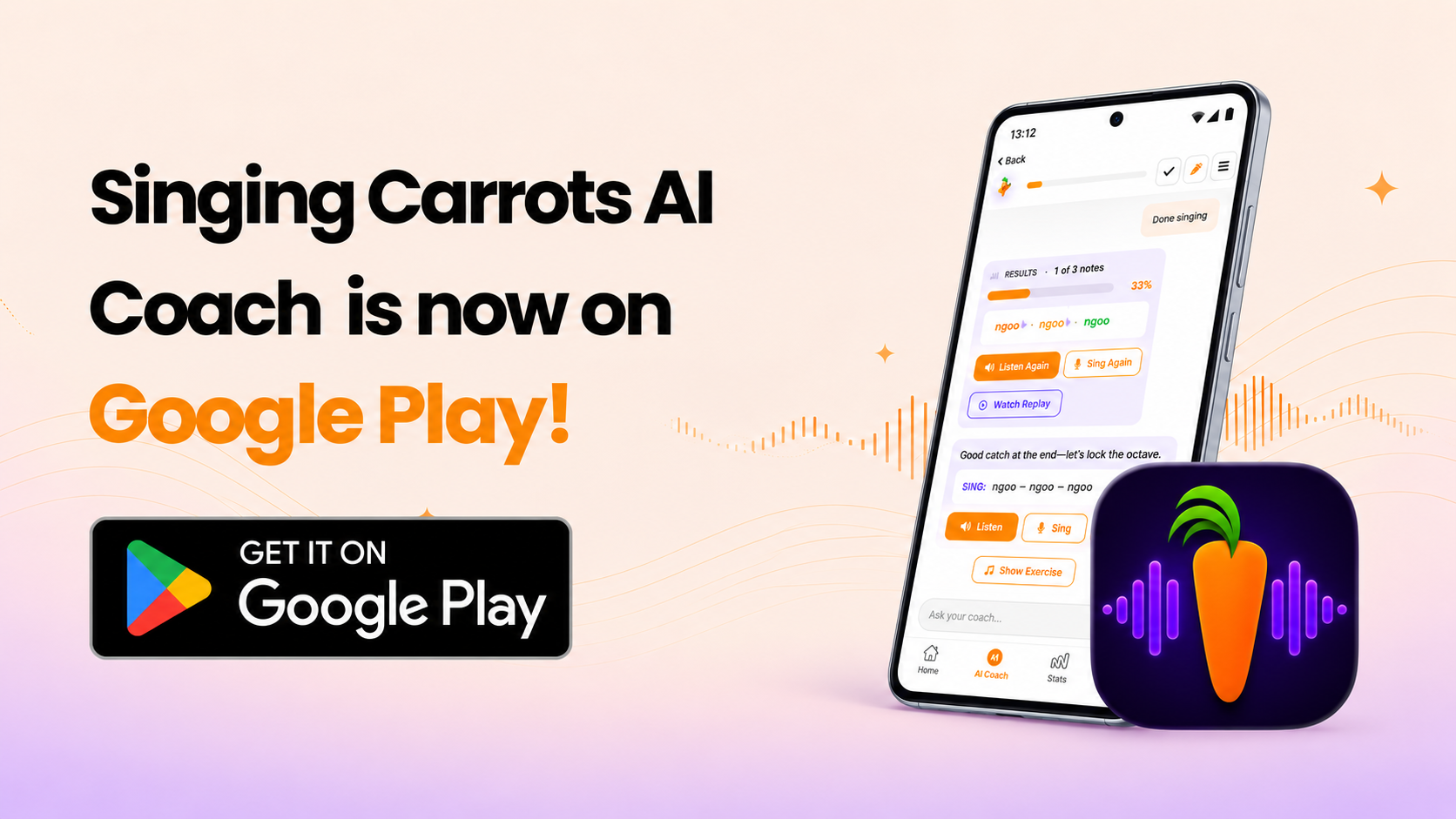
Singing Carrots AI Vocal Coach now on Android
We’ve heard it since the day we launched AI Coach on mobile browsers: “When is this getting its own …
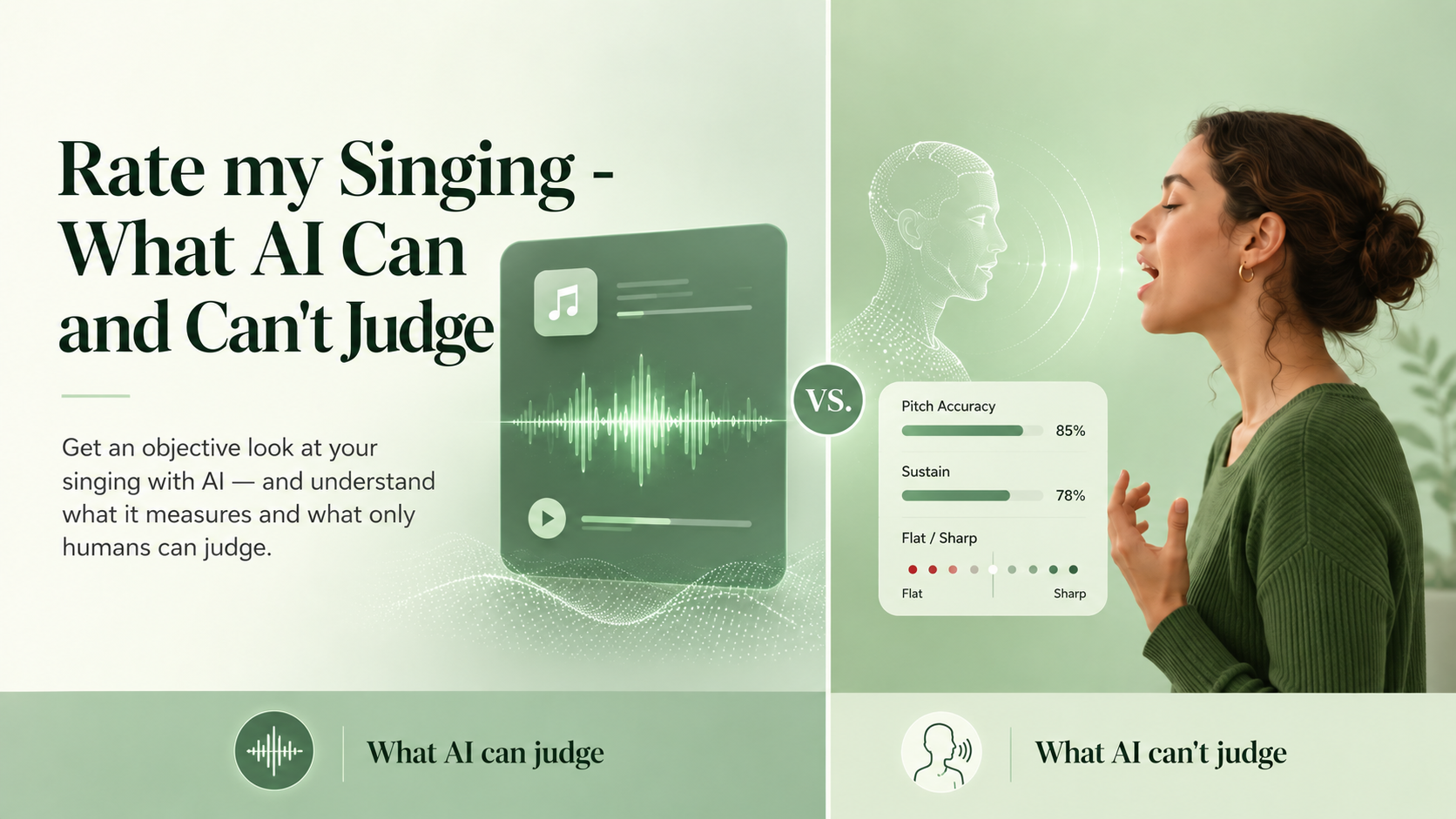
Rate My Singing: What AI Can and Can’t Judge
Want your singing rated? The honest starting point: a chatbot can’t hear you. What can actuall…
Am I a Good Singer? An Honest Framework (and How to Find Out)
Pitch, the most measurable part How much does pitch actually matter? “It matters, and I’…

The history of Singing Carrots
During the rainy Amsterdam winter of 2018, I was spending a lot of my evenings with my friends playi…

Is the Singing Carrots AI Vocal Coach worth it? An honest look
The Singing Carrots AI Vocal Coach is a strong fit if you’re a beginner or improving singer wh…
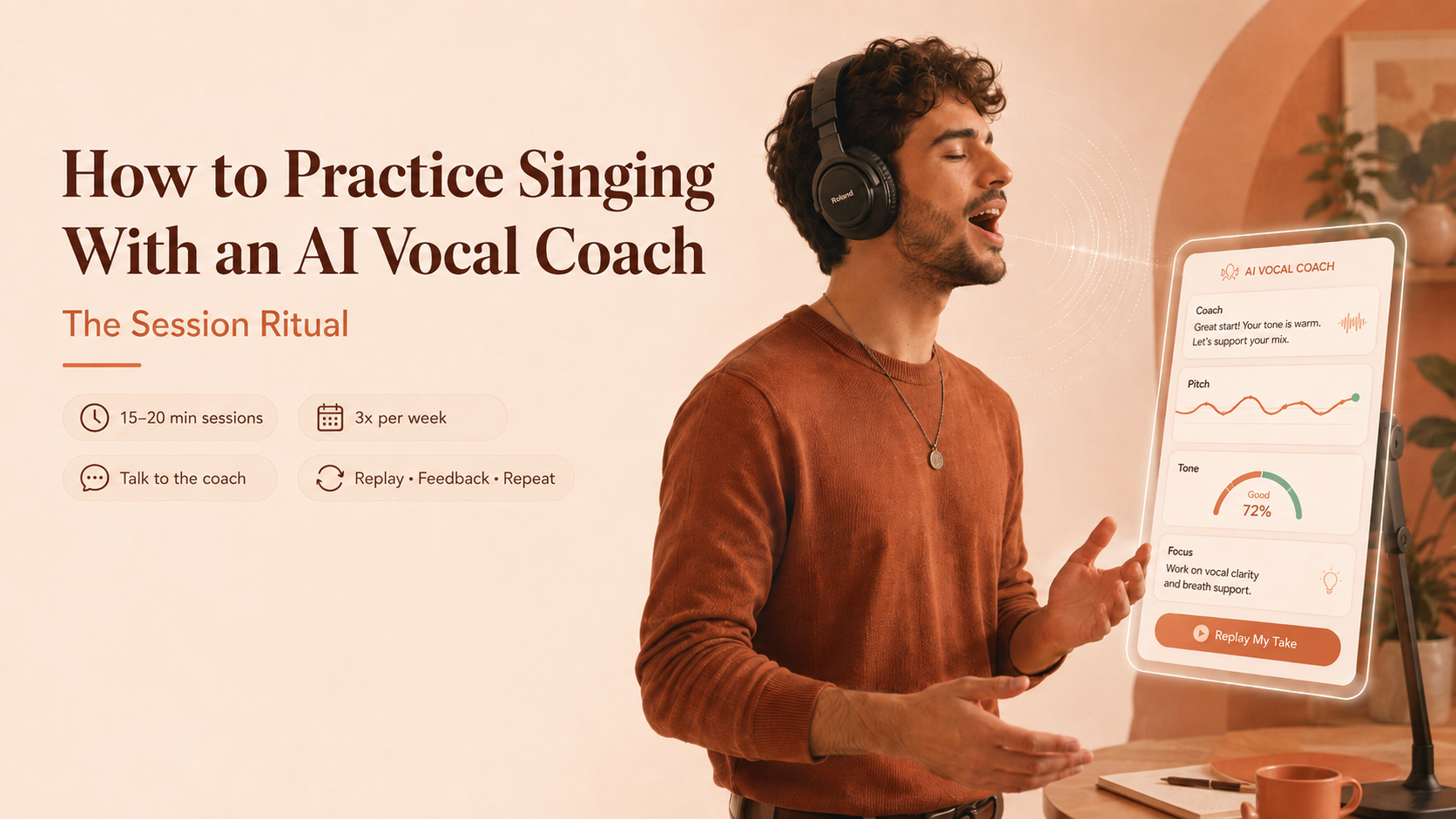
How to Practice Singing With an AI Vocal Coach: The Session Ritual
The short version: practice 15–20 minutes per session, three times a week — three short sessions bea…