

Have you ever quietly wished you could sing, but felt it might be too late or that you “just don’t have the talent”? Think again! It’s truly never too late to learn to sing, and you might be surprised at what your voice can do with a little guidance and practice. Many people are self-conscious about singing, thinking they’re “tone deaf” or past their musical prime. In reality, singing is a skill you can develop at any age – and it’s a lot of fun, too. This friendly guide will show you how to learn singing as an adult beginner – including how to find your singing voice and how to sing in tune – all while building confidence through regular practice. Let’s get started on your musical journey!
Learn to Sing at Any Age: It’s Never Too Late
Age is just a number when it comes to singing. Vocal coaches affirm that what affects your singing most isn’t your age – it’s your habits and practice routine. In fact, improvement is absolutely possible at any age with consistency and the right techniques. Some teachers have even worked with complete beginners in their 50s and 60s who went on to develop strong voices and perform confidently on stage. The takeaway? You’re never too old to learn to sing. As long as you have a willingness to learn, you can make progress.
Even if you’ve never sung before, you can start learning at any age. The only thing holding your voice back is the belief that it’s “too late.” With the right approach, improvement is possible at any age.
If you’re an older beginner, you might feel shy or worry your voice isn’t what it used to be. It’s important to let go of comparisons – don’t pressure yourself to sound like a teen pop star or your younger self. A voice that is expressive, supported, and authentically yours will always be beautiful, no matter your age. In fact, the only thing that truly “ages” a voice is the time spent believing it’s too late to start. So take a breath and remember: you have a right to sing, and it can bring you joy at any stage of life. The key is to begin and stay curious about your own voice – the rest will follow with practice.
How to Find Your Singing Voice

Every great singer started by discovering their own unique voice. So, how do you find your singing voice? It begins with a bit of exploration and understanding your vocal range. Your vocal range is the span from the lowest note you can comfortably sing to the highest note. Discovering this range is possible for anyone – it just takes some experimenting with different notes. Try humming or singing a scale down to your lowest comfortable note and up to your highest. Most people have a range of around an octave and a half to two octaves naturally, so don’t worry if your range isn’t huge at first.
A handy way to pinpoint your range is to use a vocal range test. For example, you might sing along with a piano or keyboard: find the lowest note you can hit, then find the highest note you can hit without straining. Mark those down – that gives you an idea of your range. (Singing Carrots even offers an interactive Vocal Range Test tool that lets you sing into your device and automatically calculates your range!) Knowing your range helps you identify what songs and notes will suit your voice best.
As you explore, pay attention to the different registers of your voice. Start with your chest voice, which is basically your normal speaking range – notes here will feel strong and resonate in your chest. In fact, your chest voice is where your sound is often most powerful and clear. Next, try your head voice, which is a lighter, higher range (some call it falsetto). You can find it by speaking or singing in a playful, high “Mickey Mouse” voice and noticing the vibration up around the back of your neck or head. Exploring both your chest voice and head voice will show you the high and low extremes of your comfortable range. With practice, you’ll also learn to blend between them (a mix) – but as a beginner, the main goal is just to recognize where your voice feels most at ease.
As you find your range, remember to warm up your voice gently. Simple humming or sliding between notes can help you relax and access those notes more easily. And most importantly, embrace your own sound. Everyone’s voice is unique – maybe yours is airy and soft, or bold and brassy. That’s a good thing! Don’t fall into the trap of imitating your favorite singer’s voice or trying to force a sound that isn’t naturally you. Instead, work with the voice you have. Choose songs that fall within your comfortable range and vocal style, especially at the beginning. Singing songs that fit your voice will let you sound your best and build confidence, rather than straining for notes that are too high or low. (Stretching your range is possible with training, but it should be done gradually and safely to avoid vocal strain.)
If you’re wondering how to learn singing effectively, the key is steady, mindful practice. Take time to listen to your voice, experiment with exercises, and repeat techniques until they feel natural. Over time, you’ll notice improvements not only in your vocal range but also in clarity, power, and tone. The more you explore, the easier it becomes to find your singing voice and sing with confidence. You can also consider trying a learn to sing app to help guide your training at home.
How to Sing in Tune (Developing Pitch Accuracy)
One of the biggest concerns new singers have is pitch – in other words, singing “in tune.” If you’ve ever worried that you’re tone deaf or cringe when you hear yourself sing off-key, take heart. The reality is that true tone deafness (a condition called amusia) is extremely rare. So chances are, you are not tone deaf at all! Most people who struggle to sing in tune simply haven’t trained their ears and voice yet. Even the most seemingly “tone-deaf” individuals can learn to sing in tune with practice and proper technique.

Here’s an encouraging fact: singing on pitch is 80% a listening skill and only about 20% a vocal skill. In other words, your ability to sing the correct note depends largely on how well you can hear the note (in your head and in the music) and adjust to it. This means you should train your ears as much as your voice. Start by really listening – when you sing a note, pay attention to whether it sounds like it matches the reference (the instrument or singer you’re trying to match). If it doesn’t, that’s okay; this awareness is the first step to improving.
A great exercise to learn how to sing in tune is pitch matching practice. Here’s how to do it: play a single note on a piano, keyboard app, or even a digital tuner, and then try to sing that exact note. Hold the note and focus on matching it. How do you know if you’re right? There are a few ways to check yourself: use your ears (does it sound “right”?), record yourself and listen back, or use a digital tuner that shows the pitch. Many singers today use smartphone apps or online tools to practice matching pitch – for example, Singing Carrots offers a Pitch Accuracy tool that gives you real-time feedback on whether you’re hitting the note. This kind of immediate visual feedback can be really helpful as you train your voice to land on the correct pitch.
Pitch accuracy can be improved with ear training and practice. Try playing a note on a piano (or an app) and matching it with your voice. Using a tuner or app for feedback – like an interactive pitch training game – helps you see when you’re on target.
When practicing, start with easy targets. Find a comfortable starting note (often one in the middle of your range that you can sing easily – even speaking a long “laaa” in monotone can work as a reference pitch). From that safe note, practice moving up or down to adjacent notes. You can also practice with simple tunes or scales. For instance, pick a familiar children’s song (like “Twinkle Twinkle Little Star”) and sing it slowly, checking yourself on a piano or tuner after each phrase to see if you stayed in key.
As you do these exercises, focus on listening and adjusting. If you find you’re under the pitch (flat) or above it (sharp), try to adjust in small increments. One technique is to purposely slide your note slightly higher and lower around the target pitch – this trains your ear to lock onto the correct tone. It’s a bit like tuning a guitar: you wiggle the note up or down until it’s just right. With time, you’ll start hitting the notes more accurately on the first try.
Don’t get discouraged by a few off-key notes along the way. It’s all part of the process. The more you practice, the more your brain and vocal muscles coordinate to produce the right pitches. In fact, the “secret” to singing in tune isn’t magic at all – it’s awareness and listening. By actively listening to yourself and making adjustments, you will improve. Many singers find it useful to record themselves periodically; listening back lets you catch things you might not notice in the moment and track your progress. Over time, as your ear sharpens and your muscle memory develops, singing in tune will start to feel more automatic. Stay patient and keep at it – your pitch accuracy will get better with practice, and hitting those beautiful, in-tune notes is a very rewarding feeling!
How to Learn Singing: Practice and Healthy Habits
Learning to sing is a lot like learning any other skill – regular practice and good habits will take you far. The best way to learn singing effectively is to make it a consistent part of your routine. Even if you can only practice a few times a week, that steady work will yield improvements. In contrast, singing for a long time only once in a blue moon can lead to frustration (and a tired voice!). Try to set aside a bit of time most days to focus on your voice. With each practice session, you’re building muscle memory and confidence.
Equally important is how you practice. Always remember to be kind to your voice and take care of your “instrument” (which is your body!). Here are some essential healthy habits for beginners who are trying to learn to sing:
- Warm Up (and Cool Down): Just like an athlete warms up before a game, a singer should warm up their voice before diving into a song. Gentle vocal warm-ups protect you from strain and help your voice perform its best. Start with simple exercises: lip trills (blowing air through closed lips to make them buzz), humming scales, or making gentle “siren” sounds going up and down in pitch. These get blood flowing to your vocal cords and ease them into motion. After singing, it can help to do a quick cool-down (like soft humming) to relax your voice. Taking these steps will build stamina and prevent vocal fatigue.
- Breath Support: Good singing starts with good breathing. Focus on breathing deeply using your diaphragm (the muscle below your lungs) rather than raising your shoulders or gasping. When you inhale, your belly should expand; when you sing or exhale, your belly comes back in. This diaphragmatic breathing gives you the support to sustain notes and sing with a steady, strong sound. You can practice by taking slow breaths and hissing out, or by doing pulsed “ha” sounds from the belly. Over time, proper breath control will improve your volume and tone, and it’s fundamental for singing longer phrases without running out of air.

- Posture & Relaxation: How you hold your body affects your voice. Try to sing either standing or sitting up straight. Keep your shoulders down and relaxed, and imagine a string lifting you from the crown of your head to keep your spine aligned. This proper posture opens your airways and lets your lungs expand fully. It also helps prevent unnecessary tension in your neck or throat. Relaxation is key – if you’re tense, your voice will likely sound constricted. So roll your shoulders, unclench your jaw, maybe do a few gentle neck stretches before singing. A relaxed, tall posture sets you up for a clear and resonant sound.
- Hydration & Vocal Care: Your vocal cords (folds) need to stay hydrated to function their best. Drink water throughout the day (room-temperature water is often recommended). If the air is dry, using a humidifier can help keep your throat from drying out. Also, be mindful of irritants – smoking is very damaging to the voice, and even alcohol or too much caffeine can dry you out. When practicing, if you feel your throat getting sore or tired, take a break. Just like you wouldn’t run on a sprained ankle, you shouldn’t push through vocal pain. It’s okay to rest and try again later; this prevents strain and injury. With age, voices can take a bit longer to recover, so rest is your friend. Take care of your instrument and it will take care of you!
In addition to these habits, approach practice with a positive mindset. It can be easy to judge yourself harshly (“Ugh, I sounded bad on that note!”), but remember that learning is a process. Instead of focusing on imperfections, notice the small improvements you make each time. Maybe today you held a note a second longer than yesterday, or your high note felt a bit easier – celebrate that! Set small goals for yourself, like “This week, I’ll practice 3 days and do 5 minutes of breathing exercises each time,” or “I’ll work on that tricky chorus until I can sing through it without stopping.” Goals give you something to work toward and a way to measure progress, which can be really motivating.
Make practice fun as well. Sing songs you love and that inspire you. You can practice songs and technique at the same time – for example, you might do a few vocal exercises, then sing a favorite song and try to apply one thing you learned (like keeping those shoulders relaxed or focusing on diction). Some people enjoy singing along with original recordings or karaoke tracks as a way to practice in a low-pressure way. Recording yourself occasionally is also a great idea, as mentioned – it helps you become a better listener and you’ll start hearing your improvement over time.
While self-practice is crucial, don’t hesitate to seek guidance if you can. A few lessons with a vocal coach (in-person or online) can provide personalized feedback that accelerates your progress. A good teacher will help you identify your strengths and work on specific areas (like breathing or pitch) with proper technique. They can also give you the confidence that you’re on the right track. Similarly, a structured online course can guide you step-by-step. (For instance, Singing Carrots offers a beginner-friendly course called From Zero to Singing Hero that walks you through fundamentals in a fun, interactive way.) With or without a coach, many learners also find community in joining a local choir or online singing group – making music with others can boost your confidence and keep you motivated to practice. The bottom line is: consistent practice, guided by healthy technique and a positive mindset, will lead to steady improvement in your singing.
Conclusion: Embrace Your Voice and Start Singing
Singing is a joyful journey, and it’s yours to explore at any age. Each voice is one-of-a-kind, and the world deserves to hear yours. You’ve learned how to find your singing voice, how to sing in tune, and how to learn singing with consistent practice and care. So take a deep breath, believe in yourself, and embrace the process. Remember, the only “failure” in singing is to not sing at all – every note (even the shaky or off-key ones) is a step forward, a part of learning. As one famous vocal coach likes to say, “If you can talk, you can sing,” and it’s true – you already have a voice, now it’s time to let it shine.
Why not take the first step right now? Give yourself a goal to learn to sing for today: try Singing Carrots’ Vocal Range Test to discover what notes you can sing, or play with the Pitch Accuracy trainer to see your progress in hitting the right notes. If you’re feeling excited to learn more, jump into our beginner course and let us guide you through the basics, step by step. Whatever you choose, do it with curiosity and an open heart. You can learn to sing, and every practice session will bring you closer to the confident, in-tune voice inside you. So start today – have fun with the process, use the tools at your disposal, and sing your heart out. Your singing voice is waiting for you… go ahead and set it free!

Unleash 1 Million Voices – Singing Carrots Mission
Hi. I’m Sergey, founder of Singing Carrots. I’m on a mission to unleash one million voices. Bu…
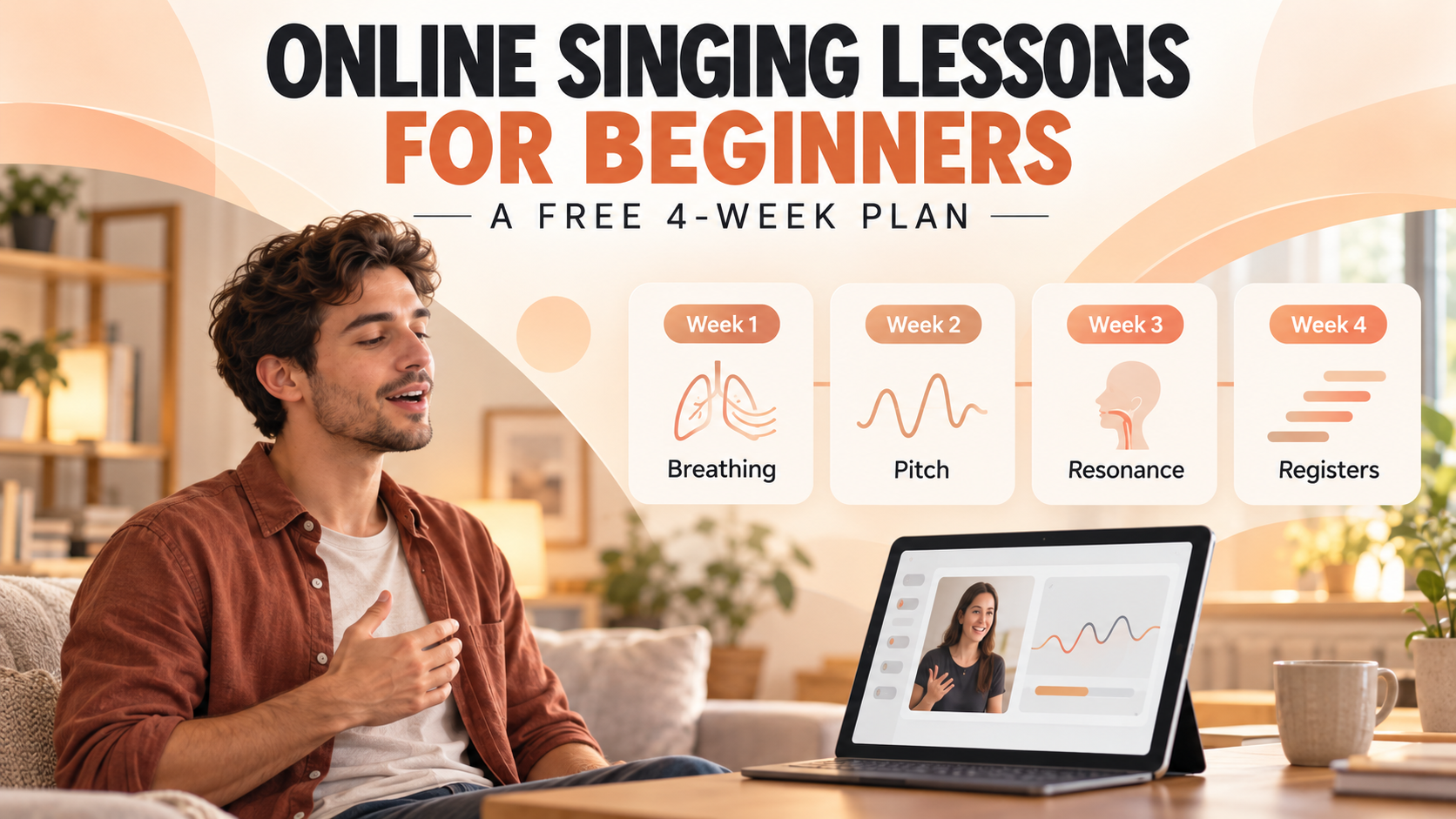
Online Singing Lessons for Beginners: a 4-week plan
You don’t need a teacher, a studio, or a good voice to start. You need about 20 minutes a day,…

Singing Lessons App or a Real Teacher? How to decide
The short answer: always first go to a teacher if something hurts when you sing, if you’ve pla…

Rate My Singing: Apps, AI Tools, and the Ways Nobody Mentions
The fastest way to get your singing rated is a free pitch accuracy test: two minutes, in your browse…

Online Singing Lessons: The Guide to Teachers, Courses and AI Coaches
Updated October 2026 Online singing lessons come in three forms : a live teacher over video call, a …

Singing Carrots AI Vocal Coach now on Android
We’ve heard it since the day we launched AI Coach on mobile browsers: “When is this getting its own …

Rate My Singing: What AI Can and Can’t Judge
Want your singing rated? The honest starting point: a chatbot can’t hear you. What can actuall…