
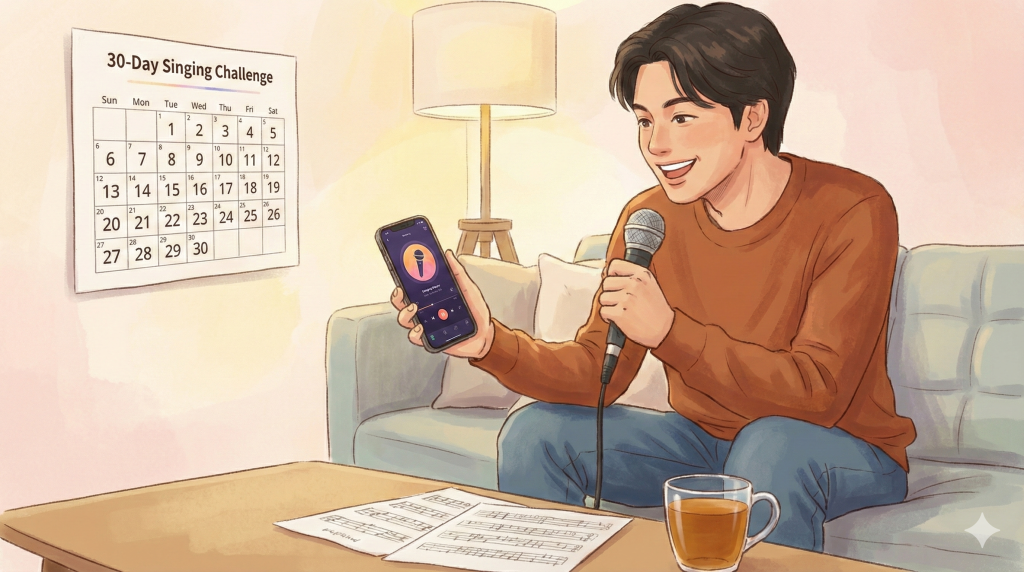
Why this Challenge Works: Even a little daily practice goes a long way – short, regular sessions build skill faster than rare marathon practices. This 30-day plan is a simple roadmap for how to learn singing at home without feeling overwhelmed. Research shows this kind of “spaced practice” helps you learn and remember longer. Plus, singing is learnable, not an inborn gift. Anyone – even adults – can improve with a bit of focused, fun practice. Each day’s mini-goal in our plan (warm-ups, breathing, singing easy songs, etc.) keeps things game-like and consistent. With milestones along the way (like hitting a higher note or sustaining a longer phrase), you’ll stay motivated and see real progress.
If you’ve been googling how to learn singing but don’t know where to start, think of this challenge as your friendly step-by-step guide to learn to sing in small, doable chunks.
Week 1: Foundations & Warm-ups
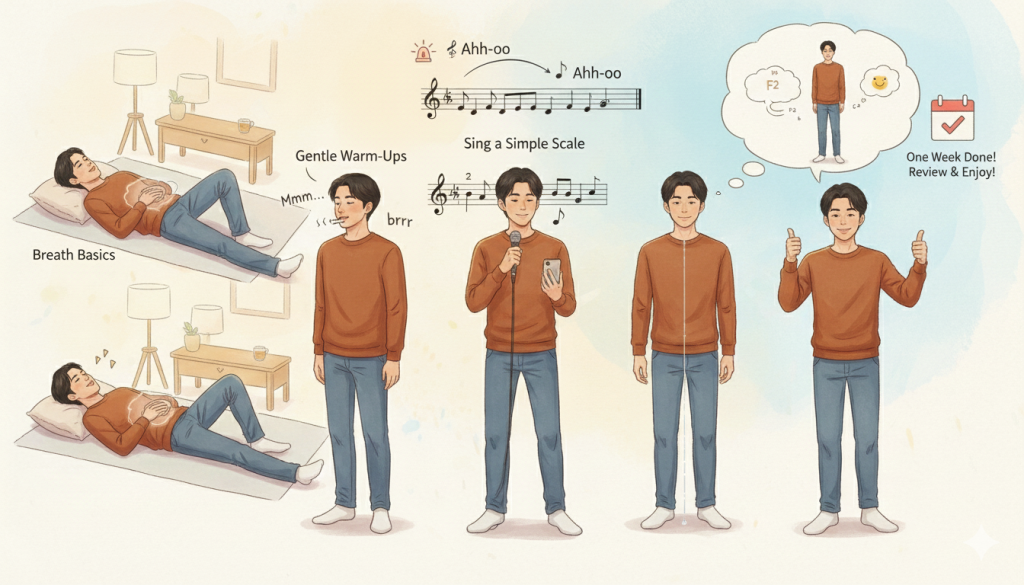
Day 1 – Breath Basics
Lie on your back and breathe deeply into your belly. Put one hand on your stomach and inhale so your hand rises, then exhale slowly so it falls. This diaphragmatic (belly) breathing is the foundation of a strong singing voice. Great singers all use their diaphragm to power long, clear notes. Even 5–10 minutes of this breath practice today will get your body ready for singing and is a very gentle first step in how to learn singing the healthy way.
Day 2 – Gentle Warm-Up (Humming)
Start with easy vocal warm-ups. Try humming or lip-trills (blowing air through closed lips to make a “brrr” sound) on comfortable low notes. This softly “wakes up” your vocal cords without strain. Focus on relaxed posture (feet shoulder-width, shoulders down) and smooth airflow. Just 3–5 minutes of warm-ups today helps stretch your voice a bit and feels fun – treat it like a warm-up jog for your voice. This is also a simple example of how to practice to sing every day without pressure.
Day 3 – Sirens and Slides
Slide your voice gently from a low pitch to a high pitch (like a siren or on a vowel sound “ahh-ooo”) and back down. This glissando/stretch helps explore your range without pinching. Remember to breathe steadily as you glide. Aim for comfort, not reaching too high or low yet. This exercise improves pitch control over time – little consistent practice stretches the range and helps you learn how to sing in tune more reliably.
Day 4 – Posture Check & Alignment
Spend today on stance: stand or sit tall with a straight spine, shoulders relaxed. Good posture lets your diaphragm work freely. Look in a mirror or practice against a wall: check that your shoulders are not hunched and your chin is level. Do another round of your Day 2 warm-up (hums or trills) in this posture. Proper alignment makes singing easier and more powerful, and it’s a key part of how to learn singing safely.
Day 5 – Sing a Simple Scale
Pick a short 5-note scale (for example: do-re-mi-fa-so) in a comfortable pitch range. Sing it slowly, breathing at the start of each descent. Focus on smooth, even sound on each note. If you have a piano or a keyboard app, play the scale first so you hear it, then match your voice to it. This builds your ear and intonation – training your voice to “find” each note and gradually teaching you how to sing in tune.
Day 6 – Vocal Range Test (Low & High)
Gently find your lowest comfortable note and your highest comfortable note (don’t strain!). Note them down (e.g. low = F2, high = C4). Knowing your range helps you choose songs later that fit your voice. End today with an easy song you love (just one verse) that sits well in your range. Have fun and don’t worry about mistakes – enjoying what you sing builds confidence and keeps you motivated to learn how to sing.
Day 7 – Review and Enjoy
Today, mix a bit of everything you’ve learned. Do a quick breath warm-up (like Day 1), then sing along to an easy song or some scales. Notice how your voice feels compared to Day 1 – you may feel more relaxed or steady. Pat yourself on the back: one week done! Celebrate even the small win of sticking to the plan – small daily wins add up and are exactly how to learn singing over time.
Week 2: Pitch & Power

Day 8 – Ear Training – Matching Pitch
Play a note on a keyboard (or use an online pitch test) and try to match it with your voice. Start with a note you can sing easily. Hum or sing the note you hear. Repeat with a different note each time. Matching pitch is a skill anyone can learn. If you miss the note, adjust and try again – this builds your musical ear and ability to sing in tune over time. This is one of the simplest exercises if you’re wondering how to learn singing at home without a teacher.
Day 9 – Vocal Strength (Hiss & “Ssss” Breath)
Take a deep breath in (using your belly) and then exhale with a steady “ssss” sound, as long as you can. This hissing exercise controls your breath release and builds lung support. Try to count how long you can hiss, then rest, then do it again. Strong breath control lets you hold notes longer and sing at any volume.
Day 10 – Practice with a Singing App
Download a free learn to sing app and try a beginner exercise. Many apps give real-time feedback on your pitch and guide you through warm-ups. Spend 10–15 minutes on one lesson or game. It’s like having a coach in your phone and makes pitch practice into a fun game. Using a learn to sing app is a great example of modern singing training online and makes it much easier to learn how to sing consistently.
Day 11 – Use SingingCarrots Pitch Trainer
Try an online tool like Singing Carrots for a pitch game or range test. Singing Carrots gives visual feedback as you sing a note. You can even track your score over time. Spend 10 minutes using a pitch accuracy game or the vocal range test. This playful practice helps you hear mistakes immediately and supports your journey to learn how to sing more accurately.
Day 12 – Dynamics (Soft vs. Loud)
Practice singing a short phrase or scale first as softly as possible (pp), then repeat it loudly (ff). Notice how your breath and posture change. Singing soft and strong develops control and confidence. Always come back to a relaxed breath – don’t push too hard at the loud end. This exercise makes you aware of your vocal volume and helps prevent strain.
Day 13 – Clear Articulation
Pick a simple lyric (or sing “la” on a tune) and exaggerate your mouth movements: open wide on vowels, and crisply articulate consonants. Try a tongue-twister (“Red leather, yellow leather”) on a melody – tricky, but fun! Good diction makes lyrics understandable and frees up your sound. Remember to keep breathing from the diaphragm as you articulate; this balance is key when you want to learn to sing clearly and expressively.
Day 14 – Celebrate Week 2
At the end of two weeks, reflect on progress. You might already notice certain notes getting easier or a steadier tone. Sing through a simple song you know, paying attention to pitch and even breathing. You’ve built solid practice habits now – give yourself credit! Celebrate by singing your favorite song from start to finish, and enjoy how far you’ve come.
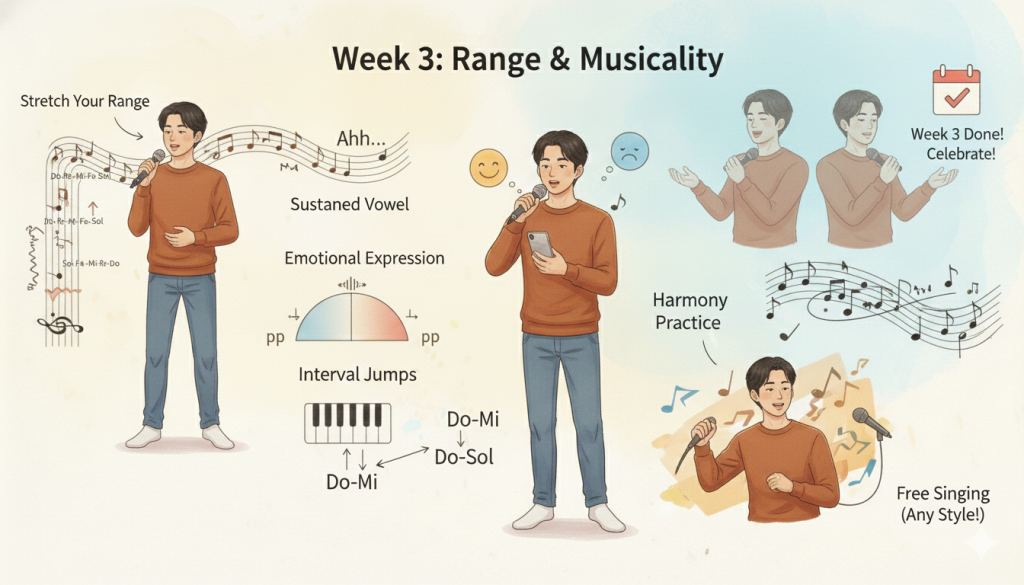
Week 3: Range & Musicality
Day 15 – Stretch Your Range
Choose a comfortable note as “home base.” From that note, hum one tone higher, then sing it, then go back to home base. Do the same downward. Each time, try to go just a little bit further up or down. This gently expands your range. With repetition, your vocal muscles will slowly extend to hit higher or lower notes comfortably. Expanding your range is a natural part of how to learn singing beyond just the notes that feel “safe” right now.
Day 16 – Sustained Vowel
Take a deep breath and sustain a vowel sound (e.g. “ahh”) for as long as possible, keeping it steady. Do this twice. Then practice again but on a comfortable pitch and add volume fluctuations (start soft, get louder, then fade out). This builds stamina and control. Remember to keep shoulders and neck loose the whole time.
Day 17 – Emotional Expression
Pick a short lyric or line from a favorite song. Sing it focusing on the emotion (e.g. happy, sad, excited) rather than perfect notes. Feel the words – maybe draw a smile or a sad face to match. Singing with feeling makes you a more expressive singer. Enjoy letting your personality shine through the words and melody.
Day 18 – Interval Jumps
Practice jumping between notes (intervals). For example, pick “Do” (1st scale degree) and then sing “Mi” (3rd degree), back and forth. Or do “Do” to “Sol” (5th). Use a piano or a tuning app for reference. This trains your ear to recognize and sing common intervals (like the start of “Doe a deer” from The Sound of Music for a Do–Mi). Gradually try bigger jumps – it’s like learning steps on a ladder of notes and helps refine how to sing in tune on trickier melodies.
Day 19 – Harmony Practice
Hum a simple melody, then try humming a harmony on top (e.g. if you hummed C–D–E, try E–F–G above it). If you have a friend or a recording, sing along to them. Working with harmony trains you to listen carefully and adjust. Even without a partner, you can record yourself singing a phrase, then play it back and sing another note along with it.
Day 20 – Free Singing (Any Style)
Today, just have fun exploring your voice. Try scatting (making up a melody with syllables), or sing scales as different “characters” (try a jazz style with a swing, or imagine you’re singing from underwater). This playful improvisation relieves pressure and builds creativity. You’ll discover new facets of your voice by breaking routine.
Day 21 – Three-Week Checkpoint
Record yourself singing a short song or exercise you did on Day 1. Compare it to how you sing today. You may notice clearer tone or steadier pitch. Celebrate these improvements – they add up fast. Plan one more challenging goal for next week (like learning a slightly higher note or a new song). You’ve made it three weeks – keep the momentum going and keep noticing how to learn singing becomes easier as you build habits.
Week 4: Performance Skills & Finale

Day 22 – Full Song Practice
Choose one song you’ve been working toward (or always wanted to sing). Break it into sections. Sing through one verse or chorus slowly, focusing on staying in tune and breathing at the right moments. Don’t worry if it’s not perfect yet. The goal is to tie together the skills you’ve learned (breath support, pitch, expression) in a real piece and see how to practice to sing an actual song, not just exercises.
Day 23 – Karaoke or Accompaniment
Put on a backing track or karaoke instrumental of a song you like. Sing along as if you’re performing. Karaoke apps or YouTube backing tracks are great — and you can also use the Singing Carrots Song Search, which offers a huge karaoke library where each song has a built-in karaoke video matched to your vocal range. This makes it easy to choose songs that fit your voice and practice comfortably without straining.
Focus on following the melody but also on having fun. Try to match the words clearly. This simulates a live performance and can be really exhilarating – plus it’s great practice for staying on pitch in context and exploring singing training online tools in a playful way.
Day 24 – Share Your Singing
Sing for a friend, family member, or even into your phone. Getting feedback (or applause!) can boost confidence. Record a video or audio clip to share. Remember, every singer started somewhere – it’s brave to show off your progress. Hearing yourself as others do can also help you fine-tune any rough spots and learn how to sing in tune more consistently.
Day 25 – Dynamic Performance
Pick a chorus of a song and experiment with dynamics. For example, start the first time soft and the second time loud. Or sing one line slowly and the next twice as fast (if it fits). Dynamic contrast keeps listeners engaged. Practice using your breath to create these effects smoothly.
Day 26 – Hit That High (or Low) Note
Attempt a note that challenged you at the start of this challenge. If it was a high note, prepare with extra warm-up (like Day 3 sirens). Try singing it carefully; if it’s still too high, find a gentle substitution. If it’s a low note, support it with firm breath. Celebrating even one more note in your range is a big win – remember, range can grow with consistent practice, and this is a core part of how to learn singing over the long term.
Day 27 – Vocal Care
Give your voice some TLC today. Do a light warm-up, then rest: drink water, maybe have some tea with honey, and avoid straining. Gentle humming or soft singing can be a warm-down. Good singers take care of their voices like athletes do. Notice how a little rest makes Day 28 even more productive.
Day 28 – Revisit and Refine
Go back to a simple exercise or song from Week 1 or 2. Notice how much easier it feels. Take one tricky part (a fast lyric or jumpy interval) and practice it slowly. Sometimes fixing small issues (tuning a note or clarifying a word) makes a huge difference in overall performance.
Day 29 – Dress Rehearsal
Treat today like a mini-concert. Do a full warm-up, then sing start-to-finish through one or two songs that you’ve practiced. You could even set up a “stage” (stand up, clear some space, pretend there’s an audience). The goal is to synthesize all you’ve learned – breath, pitch, timing, expression – in a coherent performance.
Day 30 – Final Performance & Celebrate
Congratulations – you’ve finished the 30-day challenge! Perform your chosen song(s) one last time, record or have someone listen. Look back at where you started: you’ve built habits and gained confidence. Remember to celebrate every milestone (you probably sang notes and held phrases today you couldn’t a month ago!). Keep singing daily (even a few minutes) to maintain your gains, and enjoy the fact that you did it.
Keep It Fun & Consistent
Throughout this challenge, the key is consistency and enjoyment. Even 5–10 minutes a day will yield real improvements. Warm-ups (humming, lip trills, scales) prepare your voice and prevent strain. Use tools like Singing Carrots or a learn to sing app to gamify practice – many of them offer pitch games and feedback on hitting notes, which is perfect if you’re using singing training online to support your learning. Celebrate each little win (better breath control, a stronger note, clearer tone) – these add up.
By the end of this month, you’ll have discovered how to learn singing step by step, figured out how to practice to sing in a structured way, used online resources and warm-ups, and even performed a song confidently. Remember: if you can talk, you can learn to sing. With the habits you’ve built, you’ll continue improving long past Day 30. So keep singing, stay playful, and enjoy the music you make!

Unleash 1 Million Voices – Singing Carrots Mission
Hi. I’m Sergey, founder of Singing Carrots. I’m on a mission to unleash one million voices. Bu…
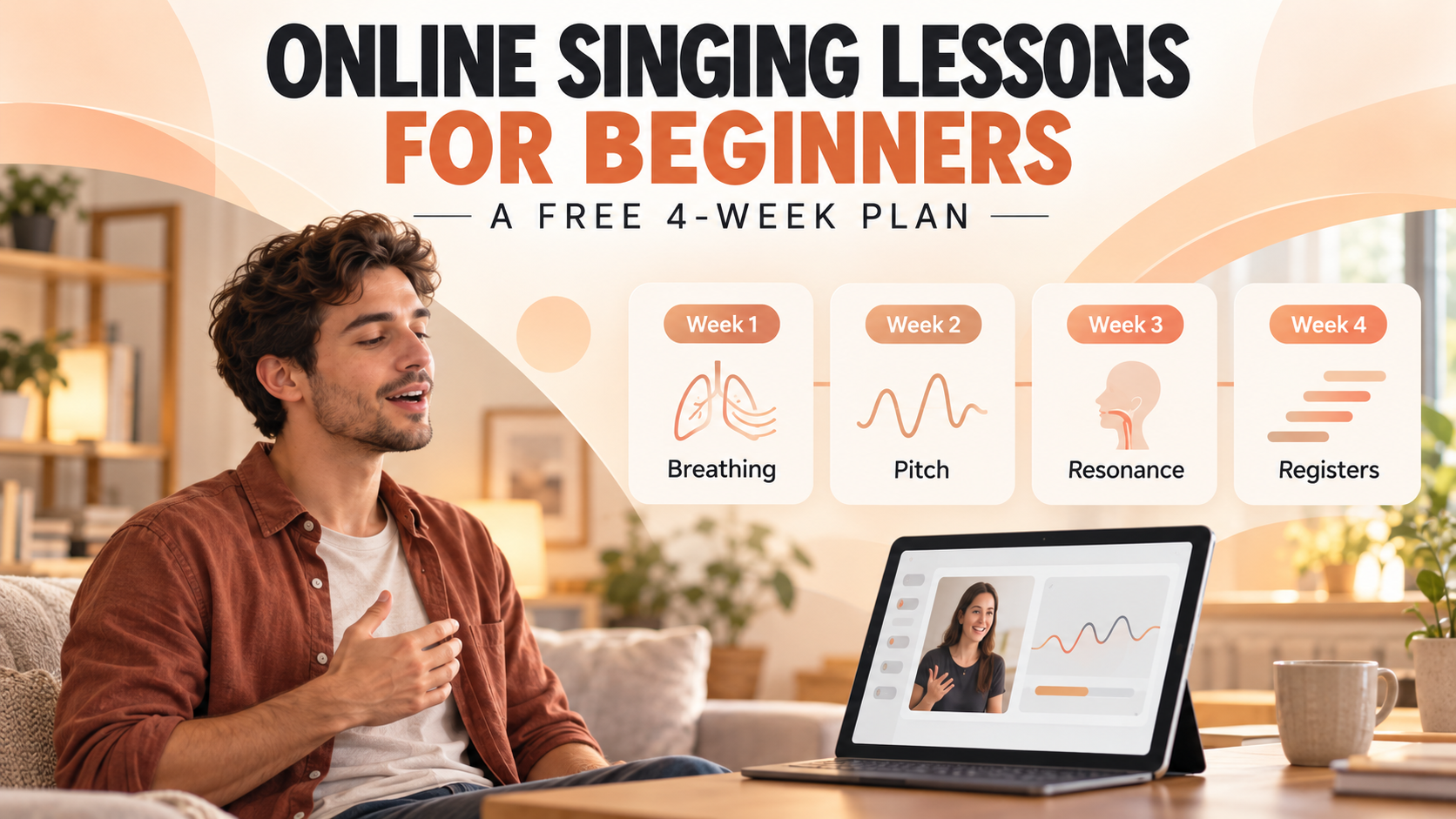
Online Singing Lessons for Beginners: a 4-week plan
You don’t need a teacher, a studio, or a good voice to start. You need about 20 minutes a day,…

Singing Lessons App or a Real Teacher? How to decide
The short answer: always first go to a teacher if something hurts when you sing, if you’ve pla…

Rate My Singing: Apps, AI Tools, and the Ways Nobody Mentions
The fastest way to get your singing rated is a free pitch accuracy test: two minutes, in your browse…

Online Singing Lessons: The Guide to Teachers, Courses and AI Coaches
Updated October 2026 Online singing lessons come in three forms : a live teacher over video call, a …

Singing Carrots AI Vocal Coach now on Android
We’ve heard it since the day we launched AI Coach on mobile browsers: “When is this getting its own …

Rate My Singing: What AI Can and Can’t Judge
Want your singing rated? The honest starting point: a chatbot can’t hear you. What can actuall…
FAQs
Can you really learn to sing at home?
Yes. Many beginners successfully learn to sing at home by following a clear routine and staying consistent. With today’s singing training online, you can access guided exercises, pitch feedback, and structured plans without needing in-person lessons.
How to learn singing if you’re a complete beginner?
The best way how to learn singing as a beginner is to start small and practice regularly. Focus on breathing, simple warm-ups, and easy songs. A step-by-step challenge helps you build habits without feeling overwhelmed.
How often should I practice to sing?
If you’re wondering how to practice to sing, daily short sessions work best. Even 5–15 minutes a day can lead to noticeable improvement over time. Consistency matters more than long or intense practice sessions.
Can adults learn how to sing, or is it too late?
Adults can absolutely learn how to sing. Singing is a skill, not a talent you’re born with. With the right guidance and regular practice, beginners of any age can improve pitch, control, and confidence.
Do I need a vocal coach to learn to sing?
Not necessarily. Many people learn to sing using online resources, guided challenges, and feedback tools. A good learn to sing app or online platform can help you practice effectively at home and track your progress.
How do I know if I’m singing in tune?
Learning how to sing in tune starts with listening and awareness. You can check your pitch by recording yourself, matching notes from an instrument or app, or using online pitch-feedback tools as part of your practice.
What if I don’t know how to practice correctly?
If you’re unsure how to practice to sing, follow a simple structure: warm up, do one focused exercise, then sing something enjoyable. A daily plan removes guesswork and keeps practice consistent and effective.
Can you sing if you’ve never sung before?
Absolutely. Most people can improve their singing voice with practice. The key is starting gently, practicing regularly, and giving yourself time to develop.
Are online tools and apps actually useful for beginners?
Yes. Singing training online and a well-designed learn to sing app can provide structure, motivation, and feedback. These tools are especially helpful for beginners learning independently at home.