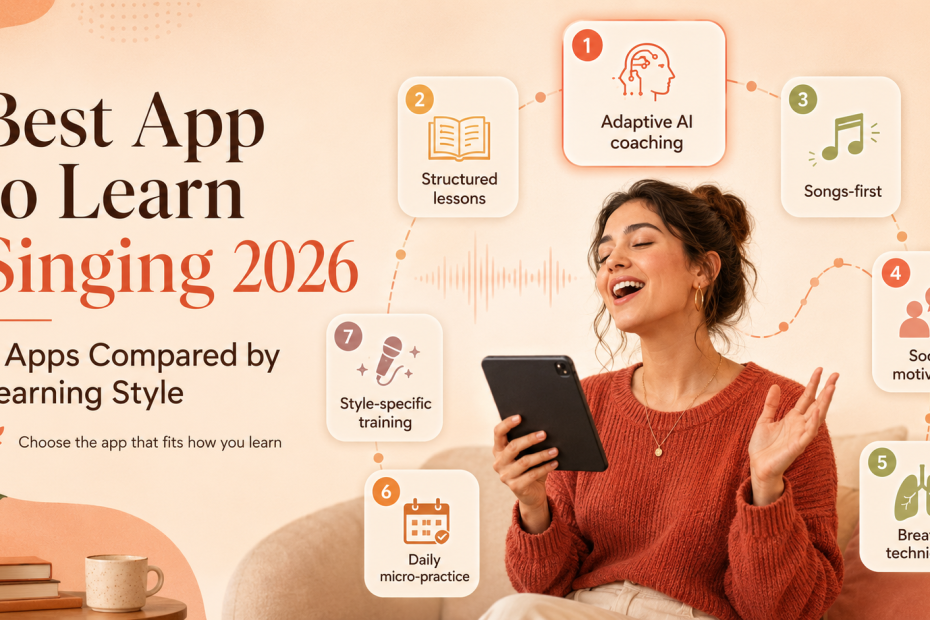
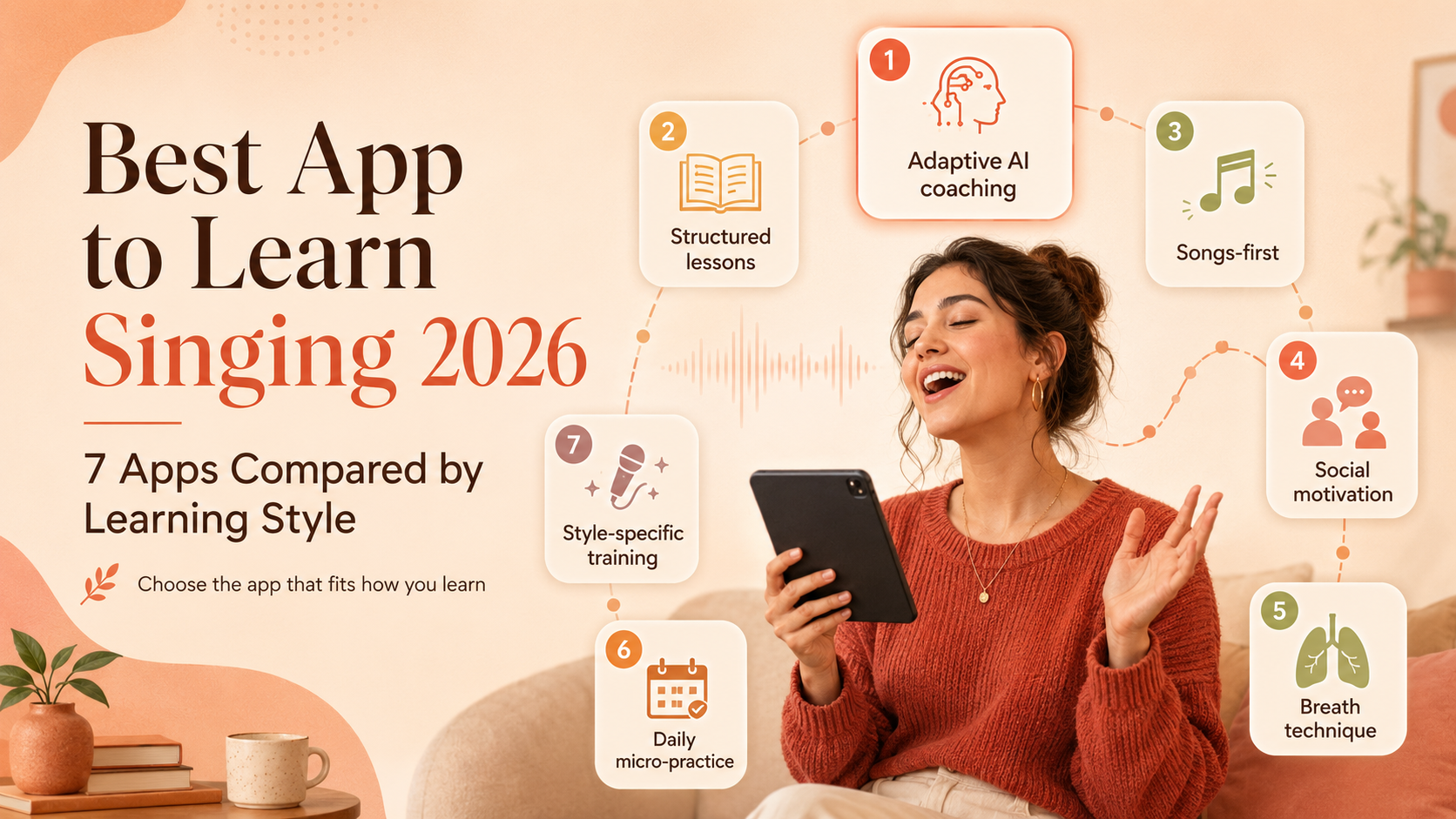
The best app to learn singing in 2026 depends on how you learn. For coaching that adapts to your voice, Singing Carrots is the strongest pick. It’s the only singing app with published outcome data (beginners gained +16.5 percentage points in pitch accuracy in four weeks). For structured lessons, choose Yousician; for learning through real songs, Simply Sing; for social motivation, Smule; for breath technique, SingSharp. All seven apps below are compared by learning style, honestly.
Updated: October 2026
Transparency note: Singing Carrots publishes this guide and appears in it. To keep it useful, every app’s entry names its genuine strengths and real gaps — including our own — and every claim about our app links to published data you can check.
Learning to sing with an app is no longer a compromise — it’s how hundreds of thousands of people practice every day. But “singing app” covers wildly different learning models: AI coaches that listen and adapt, fixed curriculums with levels, karaoke apps that make you want to show up, and drill libraries for specific techniques. The right choice isn’t about which app is “best” — it’s about which learning model fits you. That’s how this guide is organized.
Best singing apps at a glance
| App | Learning model | Best for | Real-time feedback | Platforms |
|---|---|---|---|---|
| Singing Carrots | Adaptive AI coaching | Measurable improvement, coaching that fits your voice | Yes — pitch + tone quality | iPhone, Android + any browser |
| Yousician | Structured curriculum | Step-by-step learners who like levels | Yes — note-level color cues | iOS, Android, desktop |
| Simply Sing | Songs-first | Beginners who’d rather sing songs than do exercises | Yes — pitch/timing score | iOS, Android |
| Smule | Social karaoke | Motivation through performing and duets | Pitch guide overlay | iOS, Android |
| SingSharp | Technique drills | Breath support and vocal basics | Yes + breath detection | iOS, Android |
| Bloom Vocal | Learning by critique | Written feedback on your own recordings | No — post-recording reports | iOS, Android + any browser |
| Riyaz | Style-specific training | Classical Indian & Western styles | Yes | iOS, Android |
Which learning style are you?
• “I want a coach that adapts to my voice and proof it works” → Singing Carrots. The AI coach listens, plans, and adjusts per session — with published results.
• “I want a clear path — tell me exactly what to do next” → Yousician. Levels, streaks, a fixed curriculum from basics up.
• “Exercises bore me; I’ll practice if it feels like singing” → Simply Sing (solo, songs adapted to your key) or Smule (social, duets, an audience).
• “My breathing/technique is the problem” → SingSharp, the only one with breath detection.
• “I record myself and want to know exactly what to fix” → Bloom Vocal’s learning by critique.
• “I sing classical or Indian styles” → Riyaz, unmatched for raga and style-specific training.
1. Singing Carrots — best for adaptive AI coaching
Singing Carrots is a vocal training platform used by over 300,000 singers, built around an AI vocal coach that listens to you sing in real time and adapts every session to your voice — planning exercises around your range, adjusting difficulty as you go, and remembering your progress between sessions. Beyond pitch, the coach analyzes voice quality: airiness, ring, vibrato, and loudness. It’s the only singing app with published outcome data: across 2,000+ singers, beginners improved pitch accuracy by +16.5 percentage points in four weeks, and the gains held at three months. Around the coach sit the free tools — the vocal range test, pitch accuracy test, and real-time pitch monitor — plus song search that matches songs to your measured range.

Honest gaps: no licensed karaoke catalog for singing along to real recordings, and full AI coaching requires a paid membership, though the core tools are free.
Best for: anyone who wants coaching that fits their voice and evidence they’re improving — especially beginners, the group the data says gains most.
2. Simply Sing — best for songs-first beginners
Simply Sing (from the Simply Piano team) starts with a quick range check, then adapts every song in its catalog to your comfortable key with one slider. Lyrics and note bars guide you in real time, and each take gets a pitch-and-timing score. As we put it in our iOS guide: it feels like singing, not homework — which is exactly why hesitant beginners stick with it.
Honest gaps: no technique instruction (breath, resonance, registers) and no diagnosis of why notes go wrong. It builds confidence and pitch awareness, not technique.
Best for: shy beginners and kids who’ll practice if — and only if — it’s fun.
3. Yousician — best for structured lessons
Yousician turns singing into a step-by-step curriculum: levels that build from breathing basics to advanced technique, real-time color feedback on every note, and streaks that keep the habit alive. It teaches five instruments in one app, and its Premium+ tier adds a licensed catalog of 10,000+ real songs organized by difficulty.
Honest gaps: the curriculum is the same for everyone at each level — it doesn’t adapt to your specific voice — and the feedback tells you a note was wrong, not why. The full song library sits behind the higher tier.
Best for: learners who thrive on structure, gamification, and a clear “what’s next.”
4. Smule — best for social motivation
Smule is karaoke as a social network: a huge licensed catalog, duets with friends (or strangers, or artists), and AI voice effects that polish your recordings. The pitch-guide overlay gives light feedback while you perform. For many people, an audience is the only practice plan that works — and Smule provides one.
Honest gaps: it’s a performance app, not a training app: no lessons, no progress tracking, and pitch effects can mask problems rather than fix them.
Best for: singers whose real goal is fun, community, and stage confidence.
5. SingSharp — best for breath and technique drills
SingSharp pairs pitch training with something rare: breath detection. Its Voice Mentor analyzes range, tone, and resonance, and its drills target the foundation most apps skip — proper breath support.
Honest gaps: smaller community and song selection than the big names; the experience is drill-centric rather than song-centric.
Best for: singers who know their breathing is the weak link.
6. Bloom Vocal — best for learning by critique
Bloom Vocal suits a specific learning style: learning by critique. Instead of guiding you through exercises, it reviews your finished takes — you record or upload a song performance, and the AI returns a structured written report covering pitch, tone, rhythm, expression, and technique. It’s the app equivalent of handing a recording to a teacher and asking “what should I work on?”
- Detailed written critiques of recorded performances
- Feedback covers pitch, tone, rhythm, expression, and technique
- Credit-based pricing: packs from $5.99 (~25 minutes of analysis) — no subscription, and your first analysis is free
- Works on iOS, Android, and the web
Honest gaps: Analysis happens after you sing, not while you sing — there’s no live pitch target, no session plan, and nothing adapts mid-exercise. A critique can describe a problem, but it can’t stop you mid-phrase and drill it. And because each analyzed minute costs a credit, frequent practicers pay per use where membership apps are flat.
Best for: Singers who record themselves regularly and learn most from reviewing their own takes with expert-style notes — less so for anyone who wants guided daily practice.
Platform: iOS, Android, web7.
Riyaz — best for classical and style-specific training
Riyaz stands alone for Indian classical training — raga-based exercises with real-time feedback — and covers Western styles too. For carnatic, Hindustani, or Bollywood repertoire, nothing else on this list comes close.
Honest gaps: the interface and content depth favor its classical roots; Western-pop-focused learners will find the general apps above a more natural fit.
Best for: students of Indian classical music, and style-curious singers.
Also worth a look
Time to Sing — a singing-only app from a small Berlin team: video lessons organized by style (Pop, Musical Theatre, Classical — down to techniques like belt and mix) plus a real-time voice tuner. Very new and small, and it’s coach-videos-plus-tuner rather than adaptive AI coaching — but if “learning by style” is how you learn, nothing else here is organized that way. Free tier to try; Premium runs €9.99/month. iOS and Android.
Which app should you actually choose?
If you want the honest one-line summary: choose by your bottleneck. If motivation is your bottleneck, pick the app you’ll open (Simply Sing, Smule). If structure is your bottleneck, Yousician. If technique is your bottleneck, SingSharp. And if your bottleneck is not knowing whether you’re actually improving — the most common one — Singing Carrots is the only app on this list that can show you, with data.
Two deeper dives if you want them: comparing AI vocal coaches specifically, see the Top 7 AI Vocal Coaches; choosing for iPhone specifically, see the best iOS singing apps guide. And if your question is less “which app” and more “how do I actually train at home” — routine, setup, habits — that’s a different guide: how to train your singing voice at home.
There’s no single winner — it depends on your learning style. For adaptive coaching with published results, Singing Carrots (beginners: +16.5pp pitch accuracy in four weeks). For structured step-by-step lessons, Yousician. For learning through songs rather than exercises, Simply Sing. The best app is the one whose learning model you’ll actually stick with.
Three good answers for three kinds of beginner: Simply Sing if exercises would scare you off (it’s all real songs), Yousician if you want a fixed path with zero decisions, and Singing Carrots if you want coaching that adapts to your starting point — its published data shows beginners improving most of any skill level.
They do different jobs. A human teacher hears nuance, watches your body, and teaches artistry; an app gives you daily feedback-driven practice at a fraction of the cost. For most people the real comparison is app versus nothing — and the fastest progress comes from combining both. Full breakdown: Can AI replace a vocal coach?
A karaoke app (like Smule) is built for performing songs — feedback is light and the goal is fun. A singing/training app is built to improve your voice: exercises, assessment, and progress tracking. Some apps blend both. For the full taxonomy — coach vs pitch detector vs karaoke — see What Is an AI Vocal Coach?

Unleash 1 Million Voices – Singing Carrots Mission
Hi. I’m Sergey, founder of Singing Carrots. I’m on a mission to unleash one million voices. Bu…
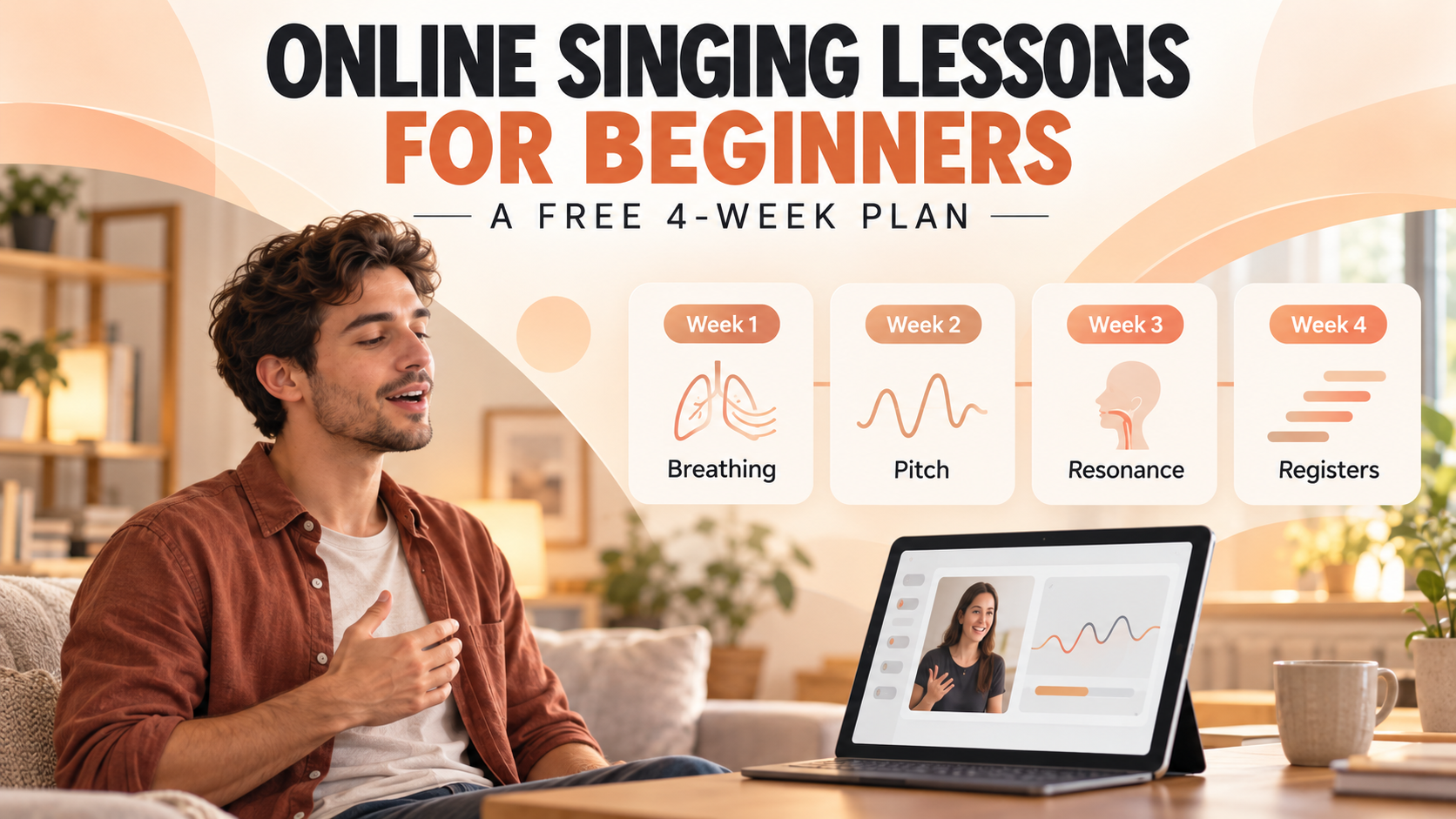
Online Singing Lessons for Beginners: a 4-week plan
You don’t need a teacher, a studio, or a good voice to start. You need about 20 minutes a day,…
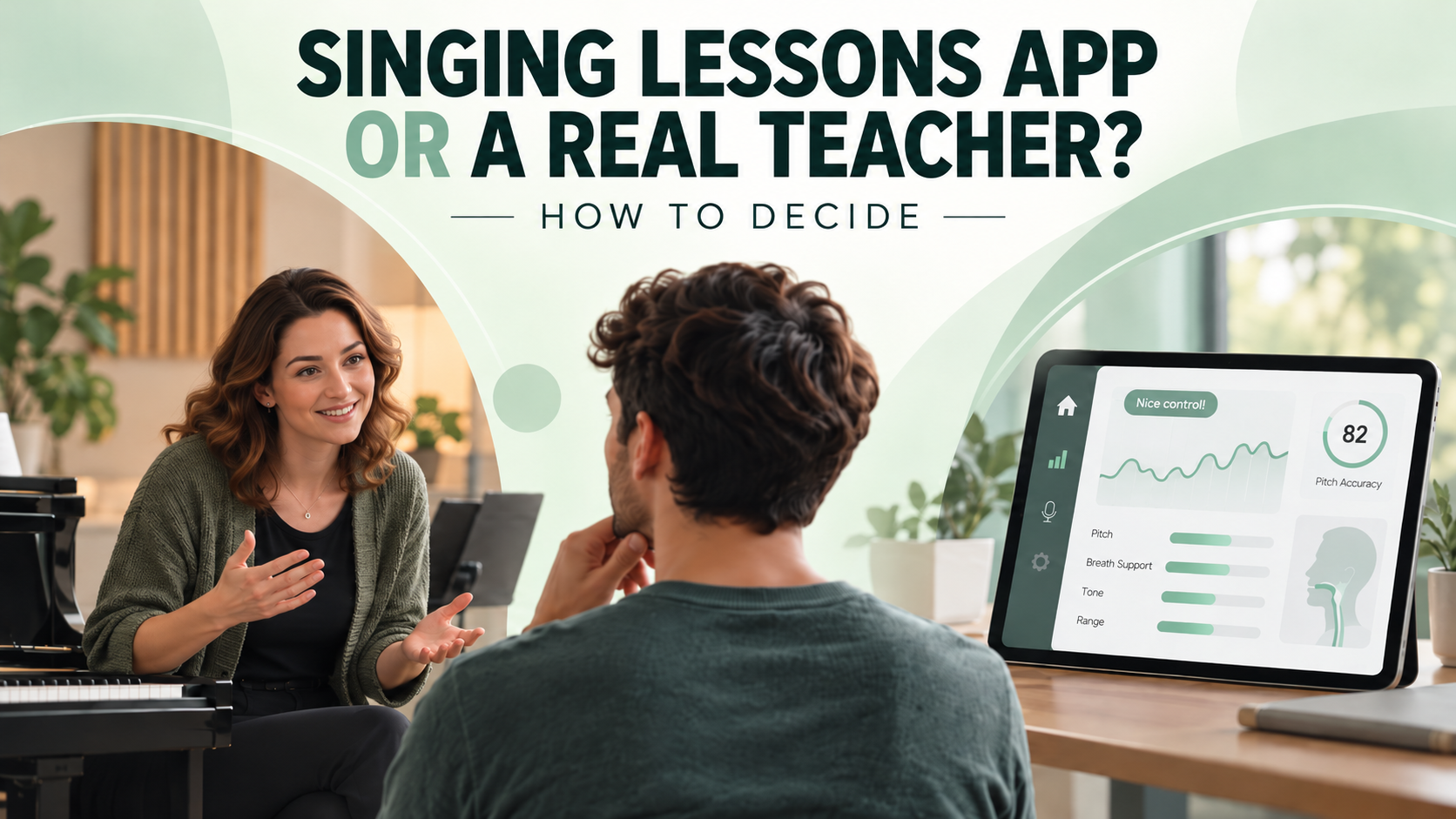
Singing Lessons App or a Real Teacher? How to decide
The short answer: always first go to a teacher if something hurts when you sing, if you’ve pla…
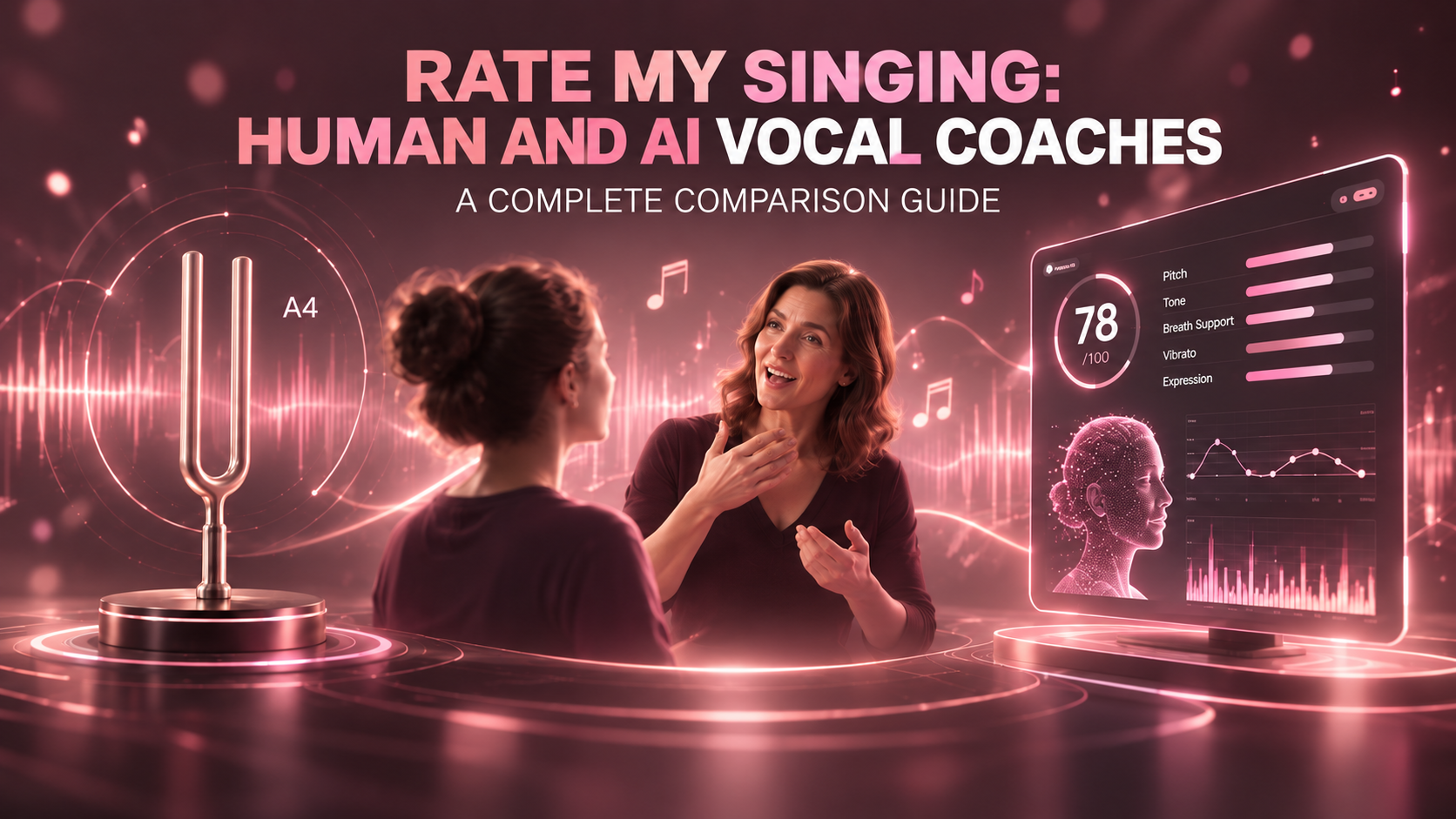
Rate My Singing: Apps, AI Tools, and the Ways Nobody Mentions
The fastest way to get your singing rated is a free pitch accuracy test: two minutes, in your browse…
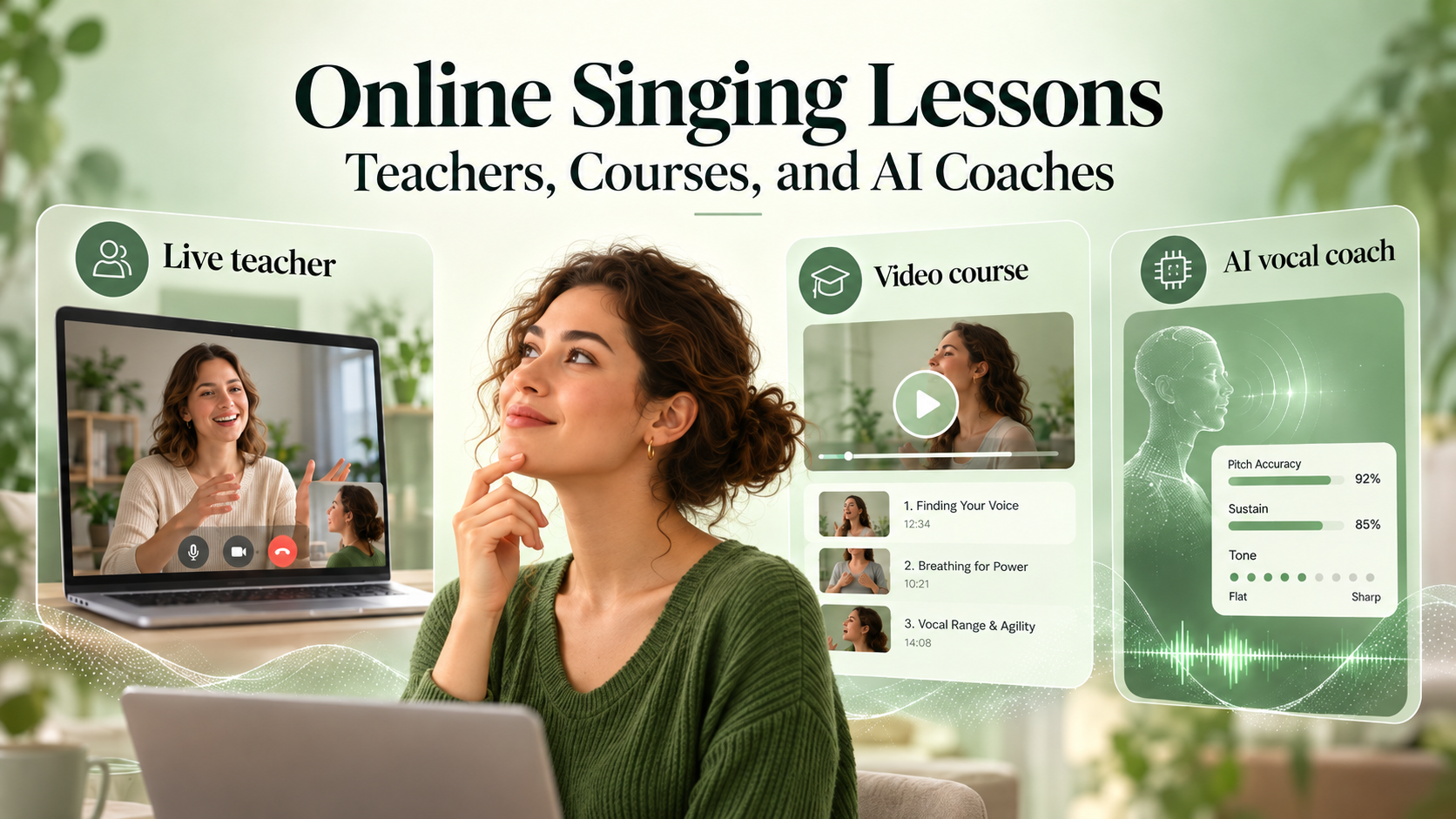
Online Singing Lessons: The Guide to Teachers, Courses and AI Coaches
Updated October 2026 Online singing lessons come in three forms : a live teacher over video call, a …
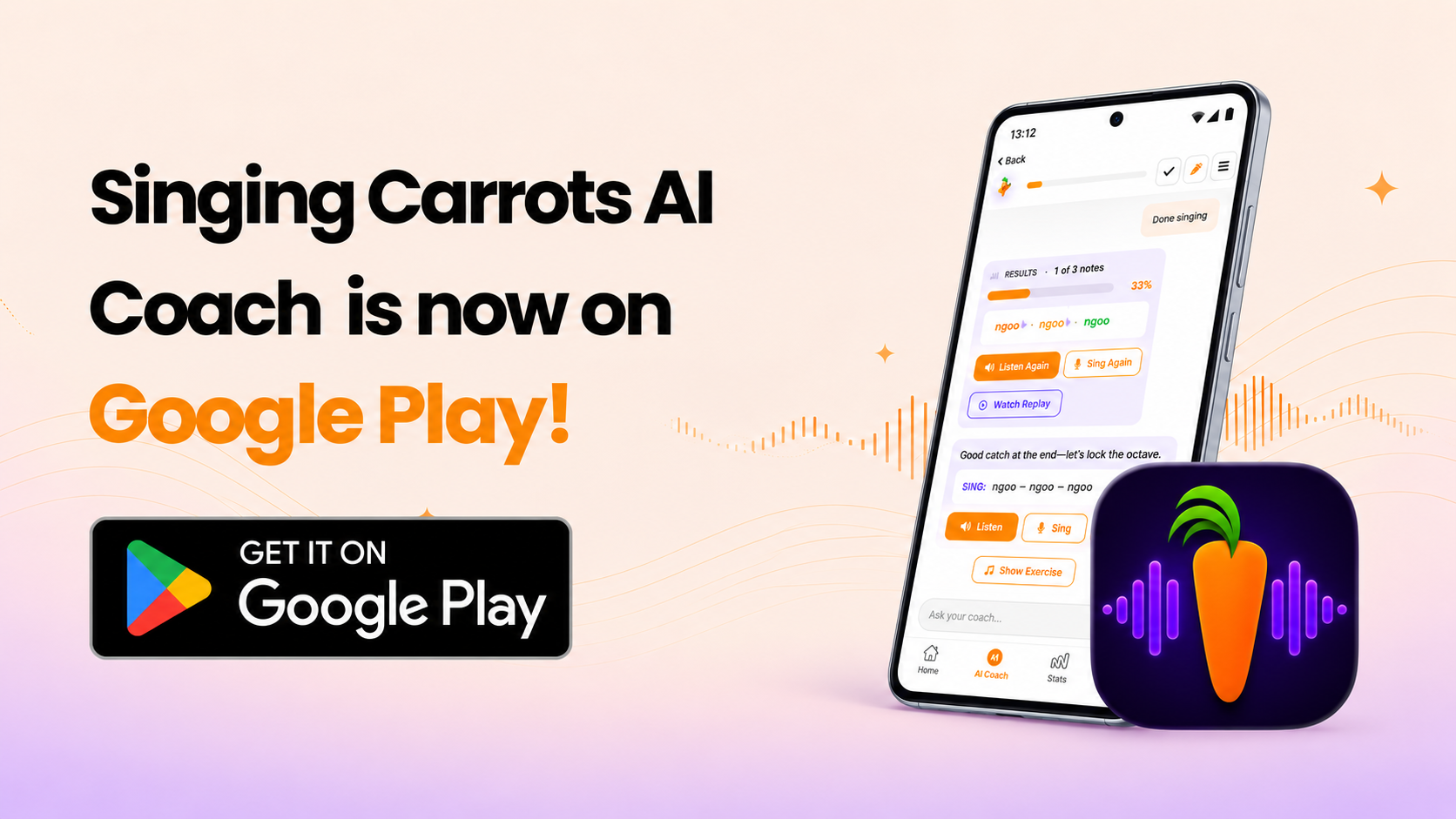
Singing Carrots AI Vocal Coach now on Android
We’ve heard it since the day we launched AI Coach on mobile browsers: “When is this getting its own …
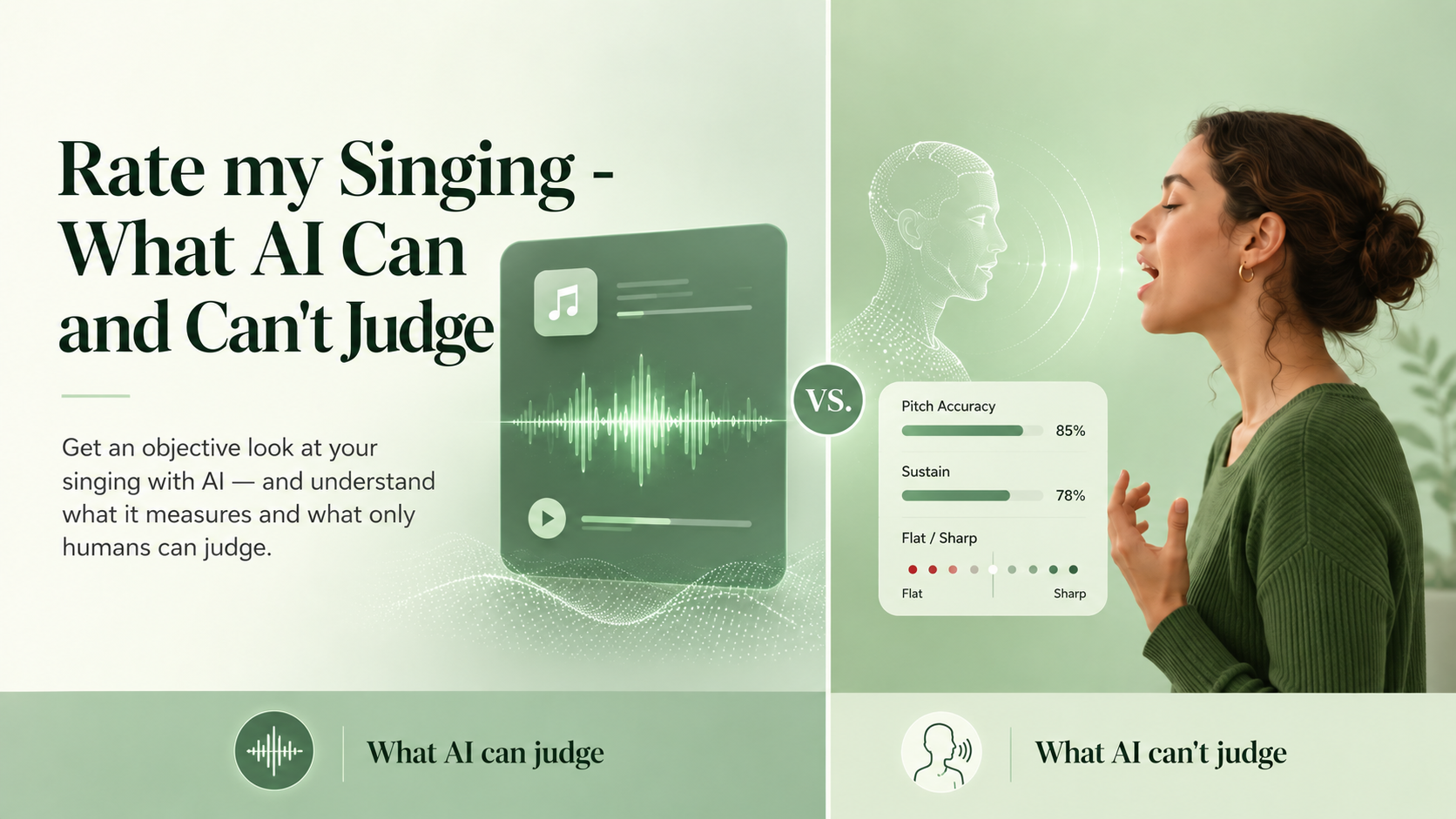
Rate My Singing: What AI Can and Can’t Judge
Want your singing rated? The honest starting point: a chatbot can’t hear you. What can actuall…