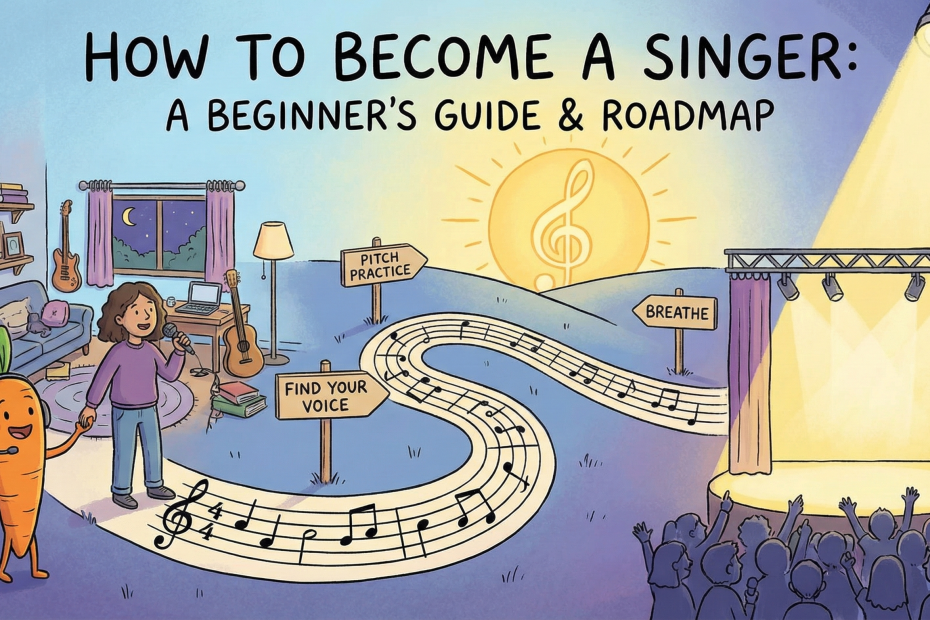

We have all had that moment—singing your heart out in the car or the shower, feeling like a rockstar, only to wonder if you could ever actually sound like one. One of the most common questions people ask is how to become a singer. Is it a magical gift you are born with? Or is it something you can build, like a muscle?
The short answer: It is a skill. And like any skill, there is a map to get you from point A (singing in the shower) to point B (singing with confidence).
This guide is your roadmap. We will strip away the complicated science and give you a practical path on how do you become a singer, starting today.
Step 1: The Reality Check (Yes, You Can Do This)
Before we start the engine, let’s clear the biggest roadblock. You are probably Googling “can anyone learn to sing” or “can anybody learn to sing“ because you are worried you might be “tone deaf.”
Here is the truth: Science is on your side. True tone deafness (a condition called amusia) is incredibly rare, affecting only about 1.5% to 4% of the population. That means roughly 96% to 98% of people have the biological hardware to sing in tune.
If you can tell the difference between a high squeak and a low rumble, you aren’t tone deaf. You just haven’t learned to coordinate your muscles yet. Singing is a motor skill, just like learning to throw a ball or type on a keyboard.
Step 2: Know Your Instrument (The Assessment)
If you wanted to start running, you wouldn’t just sprint until you passed out. You would check your fitness level first. The same applies to your voice. You cannot figure out how to improve singing voice capabilities without knowing your starting line.
Find Your Range
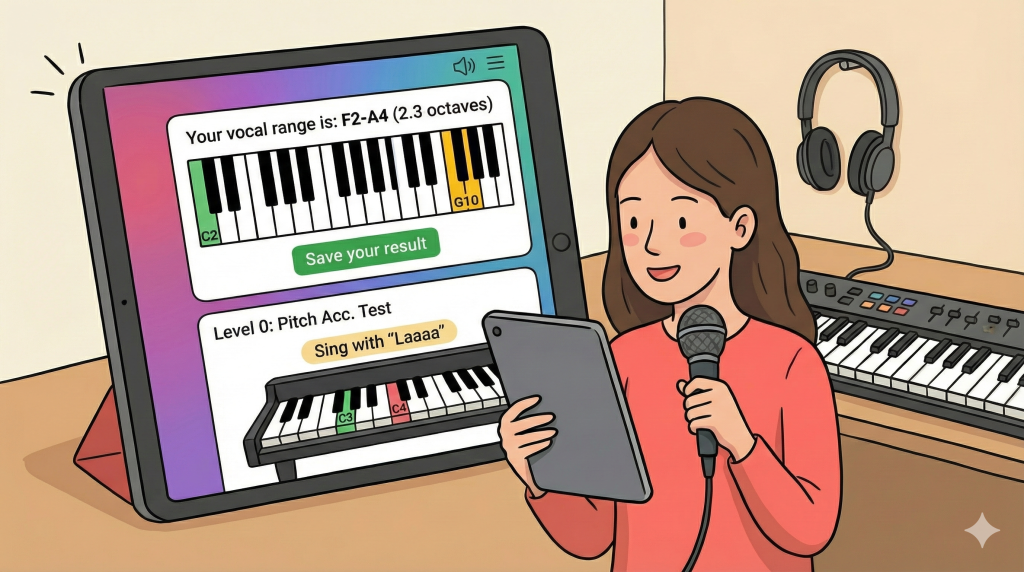
Stop guessing if you can hit those high notes. Use the Singing Carrots Vocal Range Test.
- What it does: It listens to your lowest and highest notes and tells you your “voice type” (like Bass, Tenor, or Soprano).
- Why it matters: Knowing your range prevents you from hurting your voice by trying to sing songs that physically don’t fit you.
Check Your Ears
Next, use the Pitch Accuracy Test on Singing Carrots. Think of this as a spell-checker for your singing. It will tell you if you are hitting the notes accurately or if you are drifting off-key. This data gives you a clear baseline to track your progress.
Step 3: The Daily Workout (How to Train)
Once you know your stats, it is time to build the habit. Beginners often ask, “How can I sing better?” The secret isn’t practicing for four hours on a Saturday; it’s practicing for 20 minutes every day.
Here is a simple 3-step routine to start immediately:
1. Fix Your Breathing (The Engine)
Most beginners breathe with their shoulders, which creates tension in the neck.
- The Fix: Put a hand on your belly. When you inhale, your belly should move out, like a balloon inflating. Your shoulders should stay still. This is “diaphragmatic breathing,” and it gives your voice power without strain.
2. Gamify Your Pitch (The Steering)
Drilling scales with a piano can be boring. This is where technology helps.
- The Fix: Use the Singing Carrots Pitch Training Game. It turns vocal exercises into a step-by-step game where you move through the levels with your voice. It forces your brain to connect with your vocal cords instantly, speeding up the learning process much faster than just singing along to the radio.
3. Record and Review (The Mirror)
We hate to say it, but you need to record yourself.
- The Fix: Use your phone’s voice memo app. We hear our own voices differently in our heads than the world hears them. Recording reveals the truth and helps you spot where you are flat or sharp.
Step 4: The Budget (Considering Lessons)
Apps and games are incredible for building a foundation, but eventually, you might want a human guide. A major question for aspiring singers is: how much are vocal lessons?
Prices vary wildly depending on where you live and the teacher’s experience, but here is what you can expect in the 2025-2026 market:
| Type of Lesson | Average Cost | Best For |
| Private In-Person | $60 – $100 / hour | Hands-on technique and fixing bad habits. |
| Online (Zoom) | $40 – $90 / hour | Convenience and access to teachers not in your city. |
| Group Classes | $20 – $50 / session | overcoming stage fright and singing with others. |
| Singing Carrots (Pro) | ~$10 – $15 / month | Daily practice, pitch monitoring, and visual feedback. |
The Smart Roadmap: Many students start with a tool like Singing Carrots to get the basics down (breathing, matching pitch) for a few months. Once they hit a plateau, they invest in a private teacher to refine their sound. This saves money by ensuring you aren’t paying $80/hour just to learn how to breathe.
Step 5: Get Out of the Bedroom (Performance)
You have trained, you have practiced, and you know your range. Now, how do you become a singer in the real world? You have to leave the house.
- Find Your “Band”: You don’t need to be a pro to jam. Look for “beginner jam sessions” or open mic nights in your area. Websites like BandMix or even local Facebook groups can help you find other musicians who are just starting out.
- Karaoke is Training: Don’t look down on karaoke. It is the lowest-pressure environment to test your stage presence. If you can hold a crowd’s attention at a karaoke bar, you are learning valuable performance skills.
- The First Gig: When you are ready for a real stage, be prepared. Bring your own microphone (it’s hygienic and professional), have a setlist written down, and bring spare water. The difference between an amateur and a pro is often just preparation.
Summary: Your Roadmap Checklist
- Believe: Science says you can likely learn to sing.
- Assess: Use Singing Carrots to find your Range and Pitch Accuracy.
- Train: Spend 20 minutes a day on breathing and Pitch Training games.
- Invest: Combine apps with lessons when your budget allows.
- Perform: Start with karaoke or open mics to build confidence.
The journey to a better voice is a marathon, not a sprint. But with the right map, you will get there.

Unleash 1 Million Voices – Singing Carrots Mission
Hi. I’m Sergey, founder of Singing Carrots. I’m on a mission to unleash one million voices. Bu…
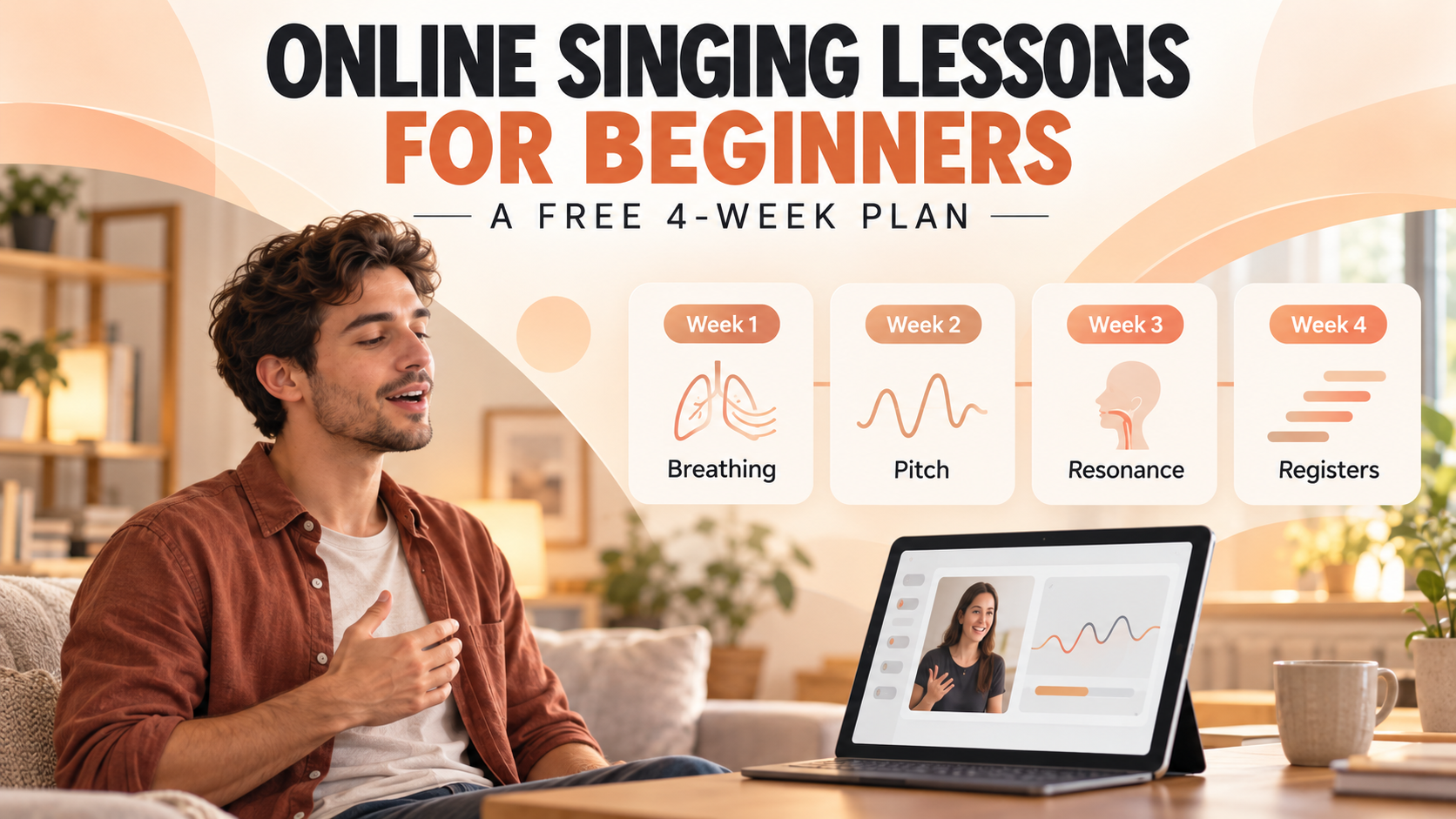
Online Singing Lessons for Beginners: a 4-week plan
You don’t need a teacher, a studio, or a good voice to start. You need about 20 minutes a day,…
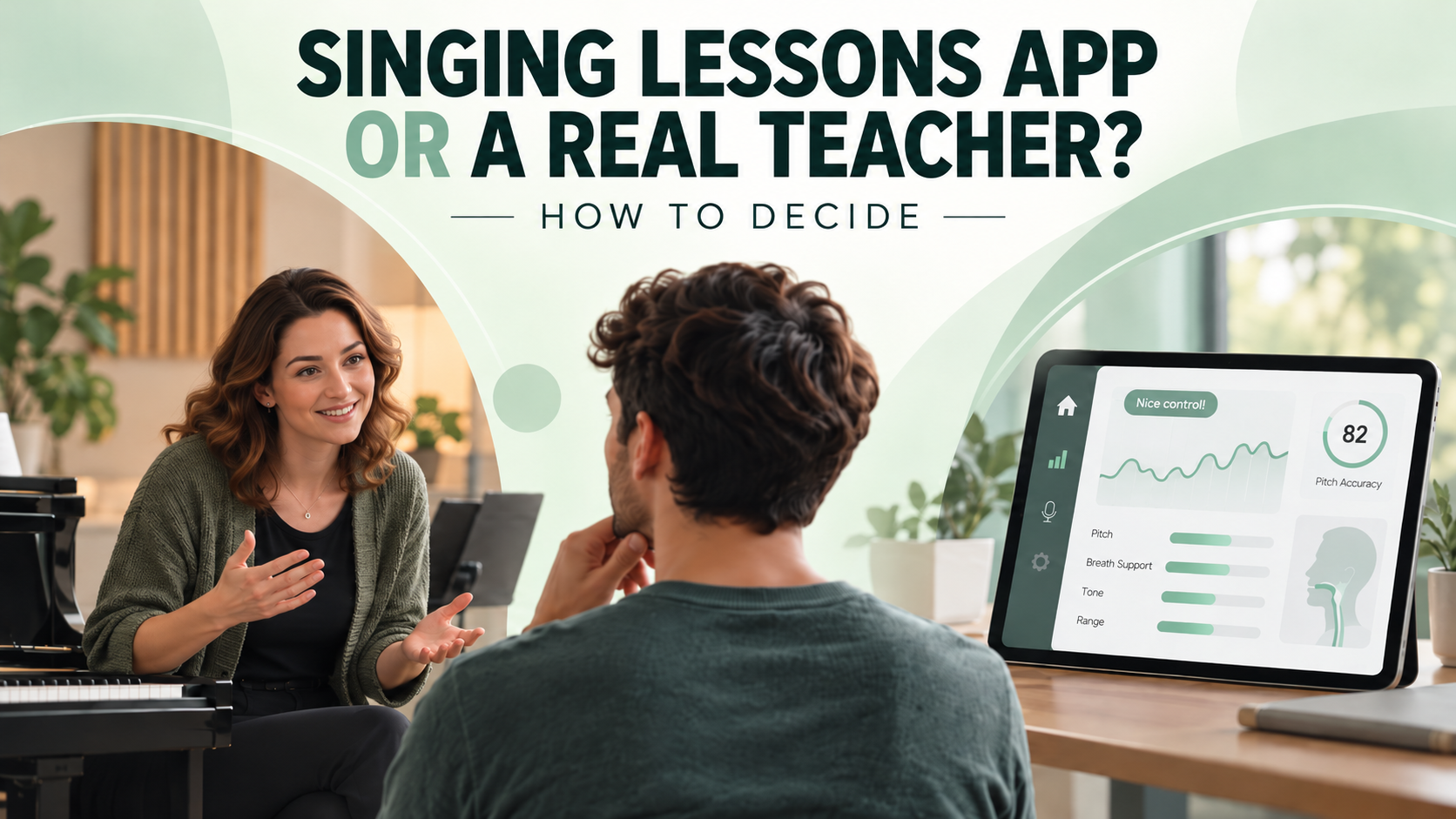
Singing Lessons App or a Real Teacher? How to decide
The short answer: always first go to a teacher if something hurts when you sing, if you’ve pla…
Rate My Singing: Apps, AI Tools, and the Ways Nobody Mentions
The fastest way to get your singing rated is a free pitch accuracy test: two minutes, in your browse…
Online Singing Lessons: The Guide to Teachers, Courses and AI Coaches
Updated October 2026 Online singing lessons come in three forms : a live teacher over video call, a …
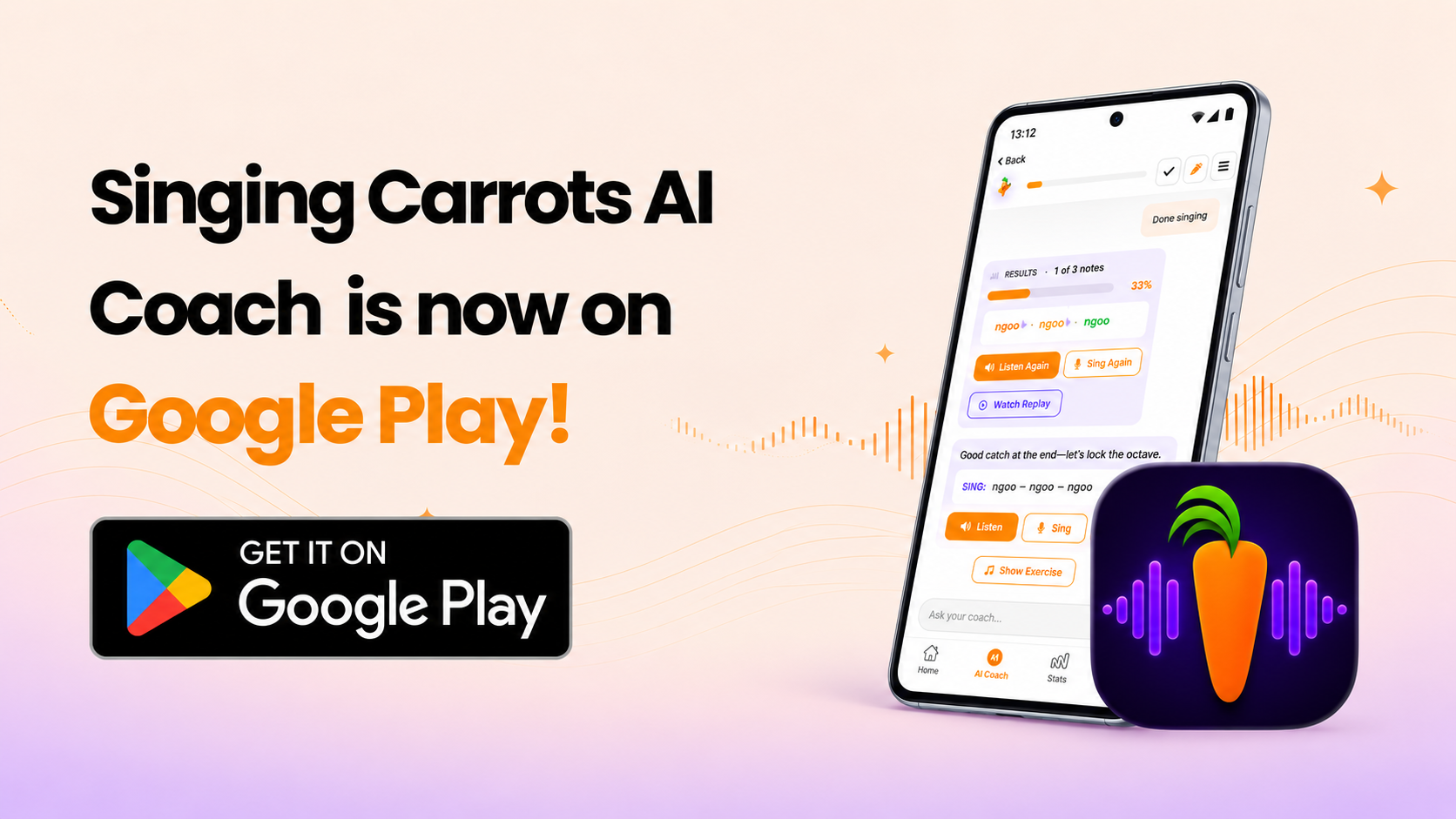
Singing Carrots AI Vocal Coach now on Android
We’ve heard it since the day we launched AI Coach on mobile browsers: “When is this getting its own …
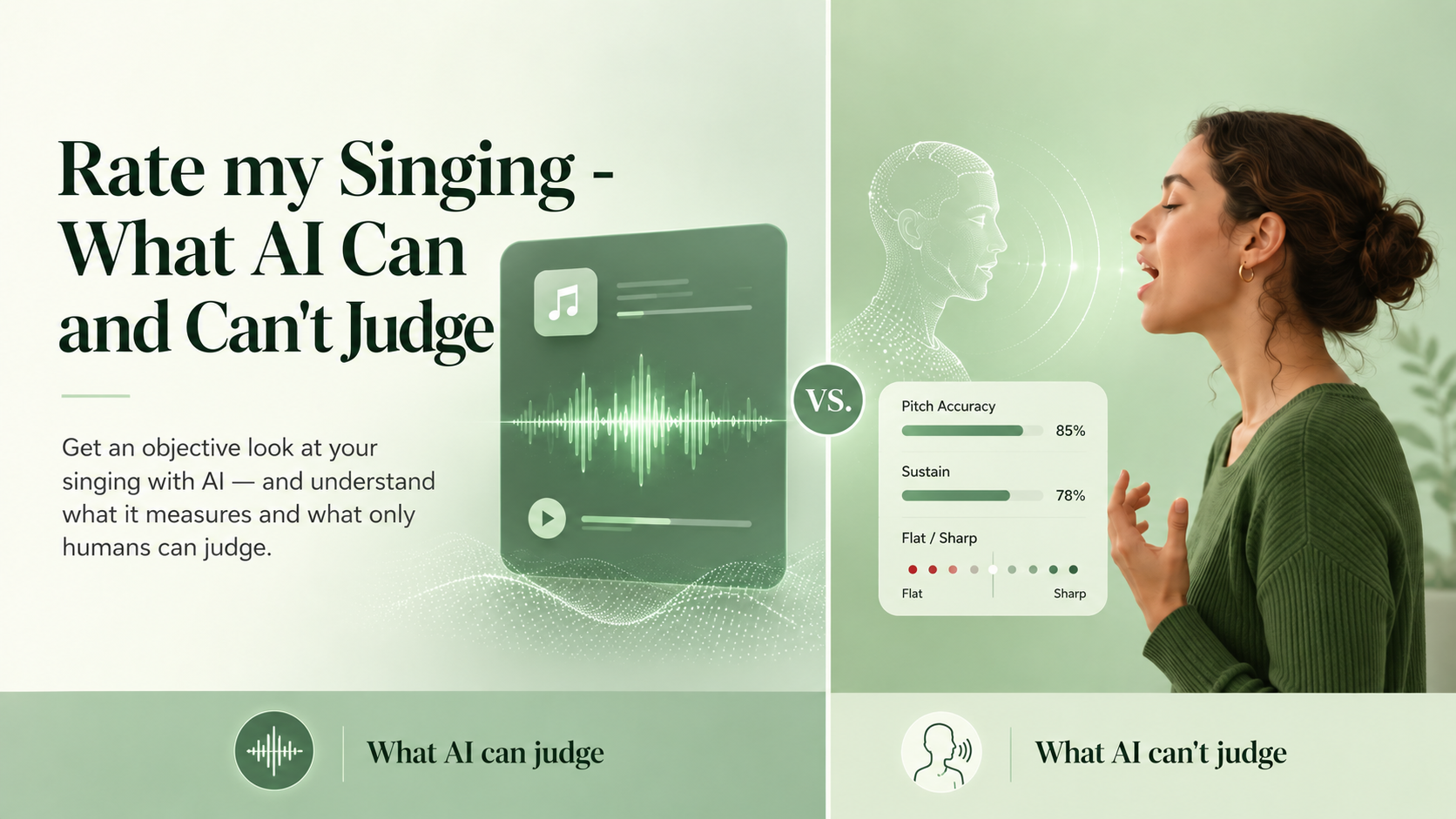
Rate My Singing: What AI Can and Can’t Judge
Want your singing rated? The honest starting point: a chatbot can’t hear you. What can actuall…